
What changed in lighting this season
Photography lighting has shifted decisively toward continuous LED and COB technology, replacing heat-heavy strobes as the standard for most creators. High-powered LED panels now dominate studio setups because they let you see exactly where shadows fall in real-time, making them ideal for beginners and anyone who shoots both photos and video. Color-adjustable LED lights with high CRI (Color Rendering Index) of 97 or higher ensure accurate color reproduction without heavy post-processing. The three-point lighting system—key light, fill light, and backlight—remains the foundation, but modern kits are far more portable and affordable than the tungsten fixtures photographers relied on five years ago. App-controlled brightness and color temperature adjustments mean you can meter light from your phone, cutting setup time from hours to minutes. This shift matters to buyers because LED lights stay cool, last for years, and use a fraction of the power that older tungsten or flash systems require.
How to choose: specs that actually matter
Start by identifying what you shoot: portraits, product photography, YouTube videos, or hybrid work. For lighting fixtures, the two key specs are wattage (measured in volts or watts) and color temperature range (measured in Kelvin). Look for lights offering 5000K to 5500K daylight, which mimics natural light and works well across most subjects. Color Rendering Index (CRI) should be 90 or higher; 97+ is professional-grade. A standard beginner kit includes three light sources with stands and modifiers—typically a 24×24 inch softbox and two smaller fill lights in the 50W to 200W range. Continuous LED lights let you adjust brightness instantly, while flash strobes offer more punch if you need to freeze motion or shoot outdoors in bright sun. SIRUI offers tripod heads and lighting accessories that pair well with most fixtures. Tenba US provides cases and stands that protect your kit. When shopping, prioritize CRI and color range over raw power; a lower-wattage light with 98 CRI outperforms a 500W fixture with 80 CRI for most studio work.
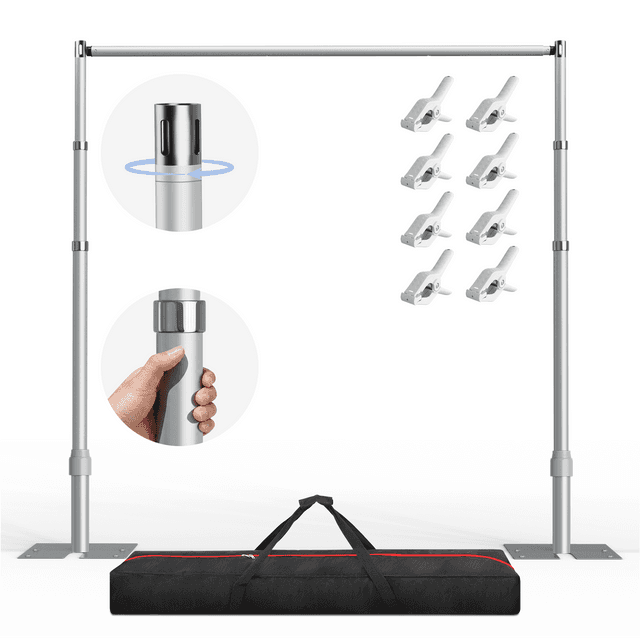 EMART Adjustable Backdrop Stand Heavy Duty, 8.9x10 FT Pipe And Drape Stand for wedding/party/birthday/display, Aluminum pole and folding base, with durable staiEMART INTERNATIONAL · $189.99
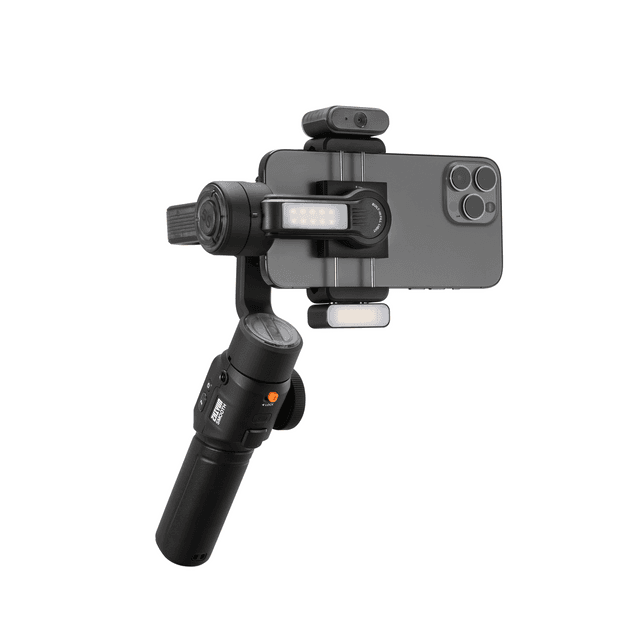 ZHIYUN Smooth 5S AI Combo | 3-Axis AI-Tracking Phone Gimbal StabilizerZHIYUN US · $219.00
 TEST2SIRUI® · $13000.00
Trade-offs: what you can safely skip
You do not need a five-light kit to start. Two lights and a reflector panel handle 90 percent of portrait and product work. Skip expensive motorized light stands and gel systems if you are learning; manual height adjustment works fine, and gels add complexity you will not use yet. Do not buy separate stands for each light; quality tripod legs cost the same as cheap dedicated photo stands and offer better stability. Reflector panels—gold, silver, white, or diffusion fabric—can replace an expensive fill light for a tenth of the cost. ZHIYUN US sells photography lights that keep kits simple and focused. You can ignore wireless remote triggers if your lights have app control via phone. Skip studio backdrops entirely if you work outdoors or use existing walls. Avoid ultra-compact travel kits; they save weight but are fiddly and frustrating. Do not buy the largest softbox sizes unless you shoot groups; 24×24 inches covers faces beautifully and uses less power. Color filters are nice to explore later, not essential now. A light meter (handheld or app-based) is useful but not mandatory if your camera's meter is reliable.
Who each kind of buyer should look at
Beginner portrait photographers should start with EMART INTERNATIONAL kits, which bundle LED lights, softboxes, and stands at entry prices under $200. They work for headshots and small group work. Product photographers and e-commerce creators need adjustable brightness and shadow control; ZHIYUN US lights offer app control and color temperature range at mid-level prices. Videographers and hybrid creators benefit from SIRUI tripod and lighting systems that support both photo and motion work. Wedding and event shooters who need portability and fast setup should explore Tenba US cases designed specifically for lighting kits—protection and organization matter more than the light itself at that stage. Professional studios with dedicated space can justify higher-end fixtures, but they fall outside this guide's scope. Brand ambassadors and content creators on YouTube or TikTok often start with EMART or ZHIYUN, then add a second light as they grow. Photographers working in small apartments or bedrooms benefit from LED's low heat and compact stands. Leica Store Miami caters to premium buyers but focuses on camera equipment rather than lighting systems.
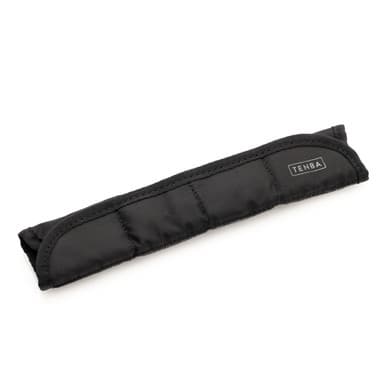 Tenba Tools Memory Foam Shoulder Pad - 1.5-inch (3.8 cm) - BlackTenba US
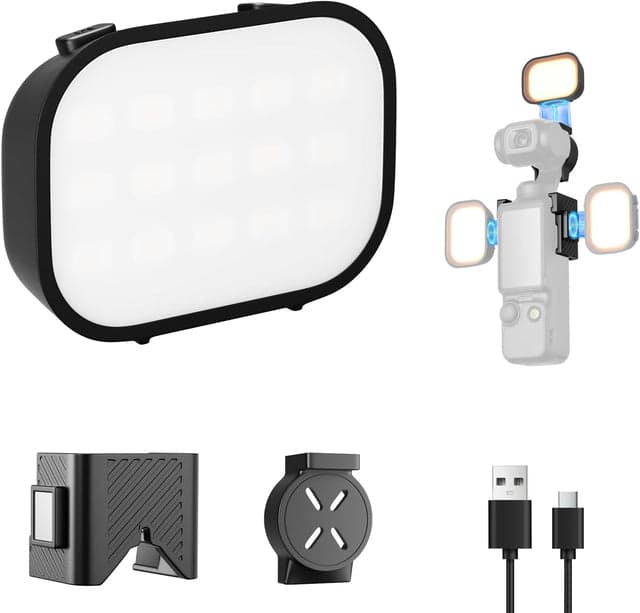 Magnetic LED Light for DJI Osmo Pocket 3, Rechargeable Mini Video Fill LightEMART INTERNATIONAL · $15.99
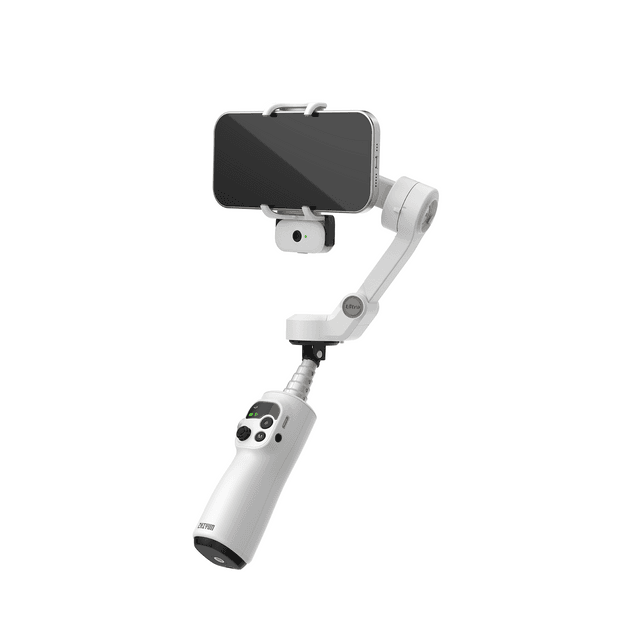 ZHIYUN Smooth Q5 Ultra Combo | AI-Tracking Phone Gimbal StabilizerZHIYUN US · $109.00
Quality and value: good buys versus cheap options
A quality lighting kit costs $150 to $400 for two or three lights, stands, and basic modifiers. EMART INTERNATIONAL and ZHIYUN US occupy that sweet spot, offering CRI of 95+ and adjustable color temperature. Do not confuse cheap LED panels with professional LEDs; low-cost fixtures use fluorescent tubes or old LED chips that render colors poorly and burn out quickly. Read the CRI spec; if it is not listed, assume it is below 85—not acceptable for professional work. Premium kits from Tenba US often cost more but include better stands and cases. A budget softbox ($30) feels flimsy and sags; spend $60 for one that stays rigid under light weight. Good value means CRI above 95, adjustable from 3200K to 6500K, a solid tripod stand rated for at least 10 pounds, and a one-year warranty. Tungsten fixtures are now a poor value; they heat rooms, burn expensive bulbs monthly, and render colors worse than LED. COB (Chip on Board) LED technology represents better value than older panel arrays; fewer individual bulbs mean longer life and simpler cooling. SIRUI accessories like tripod heads and monitor stands add value without replacing lights themselves. Watch for discounts on 2024-2025 LED models when new fixtures launch; the performance gap is marginal.
Sizing and capacity: getting it right
For most home studios and small businesses, 50W to 200W per light is plenty. Do not equate wattage with brightness; a 100W LED can outshine a 500W tungsten fixture because of efficiency. A two-light kit (100W + 50W) handles single subjects, small groups, and tabletop product shots. Three lights (100W key, 50W fill, 50W backlight) are the standard for professional studios. Light stand height matters: 6 to 7 feet tall accommodates overhead key positions and ground-level backlighting. A 24×24 inch softbox suits face and bust shots; go to 32×32 inches if you regularly shoot full-body or groups. Umbrella reflectors diffuse light widely but are harder to control; softboxes give more precision. Reflector panel kits come in 22-inch to 48-inch sizes; begin with 32 inches—portable but large enough for bounce light. EMART backdrop stands pair well with small footprint kits; measure your space before buying. If you move frequently, prioritize compact cases from Tenba US over heavy rolling stands. A five-foot-tall ceiling limits overhead light placement; position key lights at 45 degrees instead. Shooting video requires larger modifiers (for softer shadows); stills tolerate smaller, faster modifiers. Plan for room depth; a 10×10 foot space needs compact tripod stands; 15×20 feet allows larger, more stable rigs.
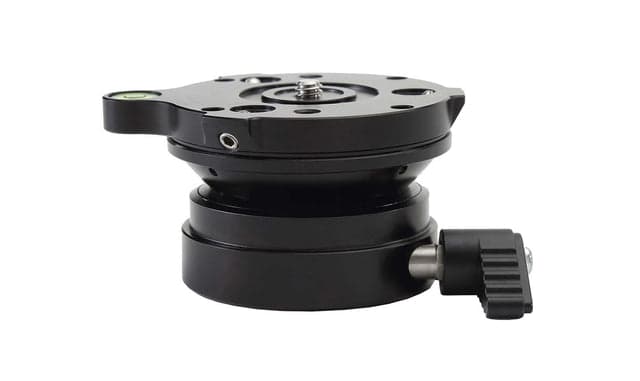 SIRUI AM-60LE Levelling HeadSIRUI® · $139.00
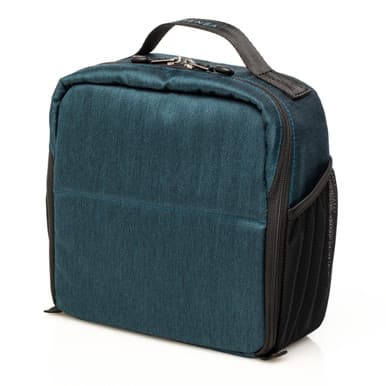 Tenba BYOB 9 Slim Backpack Insert - BlueTenba US
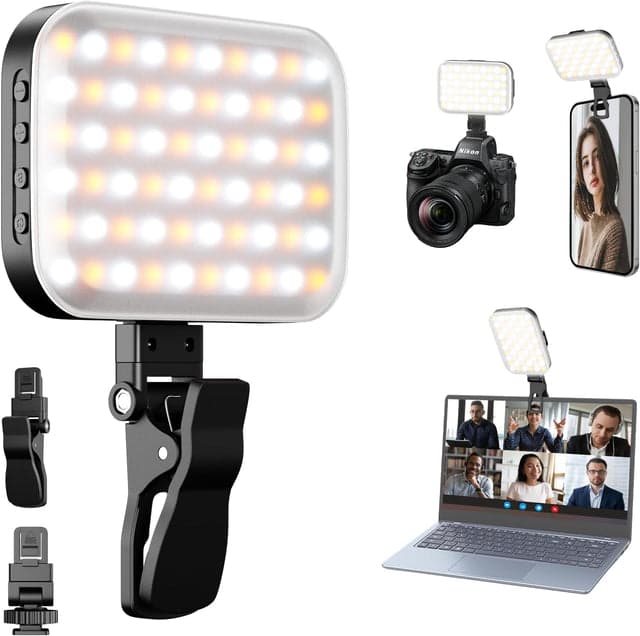 60 LED Selfie Light for iPhone, Protable Clip Light for Phone CameraEMART INTERNATIONAL · $13.99
How to save money: when and what discounts cover
New photography lighting kits rarely drop more than 15 to 20 percent from retail price, even during major sales. Black Friday deals in November typically cover bundle packages (light + stand + softbox), not individual components. Look for discontinued models from the previous year; older ZHIYUN US lights with the same CRI and output as current models sell at 25 to 35 percent off. Buying used LEDs is lower-risk than used strobes; LED technology is simpler and failures are rare if the unit powers on. Check return policies; many retailers allow 30-day returns on kits, letting you test at home risk-free. Coupons often exclude sale items or require minimum orders; a 10 percent code may not stack on a kit already discounted 20 percent. Stands and modifiers discount more aggressively than light fixtures themselves. EMART backdrop stands and SIRUI accessories often sell at 15 to 25 percent off during sales. Buy cases and backup stands only after confirming your main lights work well; do not front-load spending on protection. Seasonal pricing: summer and holiday-shopping seasons (November through December) bring more discounts than spring. Warranty extension rarely justifies cost on LEDs; skip it unless buying used. Rental services and trial programs from photography education sites let you test before buying full price.
Where people go wrong comparing options
The biggest mistake is comparing wattage across light types—a 100W LED is not equivalent to a 100W tungsten or strobe. LED efficiency makes the LED appear brighter at half the power. Buyers often fixate on the number of lights in a kit and ignore CRI; three 80-CRI lights produce muddy skin tones no matter how many fixtures you own. Assuming expensive means better is equally misleading; EMART and ZHIYUN offer 96+ CRI at mid-range prices, while premium brands add brand value, not measurably better color. Overlooking color temperature range creates frustration: a light that only covers 5500K daylight will not adapt to tungsten or candlelight scenes. Comparing kit prices without checking included modifiers is dangerous—one kit at $250 may have cheap softbox material that sags, while another at $280 includes rigid construction and a reflector panel. Many buyers skip the specs entirely and buy based on aesthetics; matte-black fixtures look professional but perform identically to silver ones. Tenba US cases and SIRUI accessories are often confused with lighting; they support lighting work but do not replace actual lights. Assuming three-point lighting is mandatory for all work wastes money; many photographers use one key light and a reflector, skipping a third fixture entirely. Confusing strobe with LED for video shoots is common; strobes freeze one frame, LEDs work for continuous motion—they serve different purposes.
Common mistakes shoppers make and how to avoid them
Mistake one: Buying the largest softbox without measuring space. A 48-inch beauty dish looks impressive but requires 10 feet clearance and dominating space. Measure your shooting area first; 24 to 32 inches suits 90 percent of home studios. Mistake two: Not testing white balance before committing. LED color temperature shifts slightly between brands and wattage. Shoot a test frame of a white card under your lights and adjust in-camera white balance before a real shoot. Mistake three: Treating all stands as equal. Cheap tripod legs topple under 10-pound softbox weight; buy stands rated for 12+ pounds, even if you start with lighter fixtures. EMART backdrop stands are engineered for stability; lighter alternatives save money short-term but fail unexpectedly. Mistake four: Ignoring the learning curve for strobes. Flash photography requires understanding sync speed, flash power, and trigger lag. Continuous LED lights are more forgiving; beginners should start there. Mistake five: Buying kits without checking return policies or trying at home. Kits that look good online may not suit your space or color taste; 30-day returns prevent expensive regret. Mistake six: Forgetting heat and ventilation. LED stays cool, but tungsten and some older LEDs heat rooms; if your space is warm, LED is mandatory. Mistake seven: Underestimating cable and adapter chaos. Buy cable ties, gaffer tape, and spare adapters early. ZHIYUN US kits often include these; check before buying elsewhere. Mistake eight: Assuming brightness equals quality. Two 200W lights with 80 CRI produce worse portraits than one 100W light with 98 CRI and a reflector fill.
Our top picks

EMART INTERNATIONAL65% off
Entry-level softbox and LED light kits under $200 with tripod stands, ideal for beginners and product photography on a budget.
Shop EMART INTERNATIONAL →15 EMART INTERNATIONAL coupons →
ZHIYUN US49% off
App-controlled LED lights and photography lighting with adjustable color temperature, suited for hybrid photo and video creators.
Shop ZHIYUN US →15 ZHIYUN US coupons →
SIRUI®90% off
Premium tripod heads, stands, and lighting accessories that pair with any kit; built for both stills and motion work.
Shop SIRUI® →15 SIRUI® coupons →
Tenba US25% off
Protective cases, backpacks, and rolling stands designed to organize and transport lighting kits safely between locations.
Shop Tenba US →15 Tenba US coupons →Frequently asked questions
Do I need strobes or continuous LED lights?
Beginners and video creators should start with continuous LEDs; you see the light in real time and adjust shadows before shooting. Strobes freeze fast motion but require more practice. LEDs work for 95 percent of portrait and product work at lower cost.
What is CRI and why does it matter?
Color Rendering Index (CRI) measures how accurately a light displays colors, on a scale of 0 to 100. Aim for 90+ CRI; 97+ is professional-grade. Poor CRI (below 80) produces muddy, inaccurate skin tones that no post-processing fully fixes.
How many lights do I actually need to start?
Two lights and a reflector panel handle most portraits and products. Three-light setups are standard for studios but not essential. Many professional photographers use one key light, one fill (via reflector), and rely on existing ambient light.
- https://www.studiobinder.com/blog/led-photography-lights/
- https://expertphotography.com/studio-lights-types
- https://www.digitalcameraworld.com/buying-guides/the-best-softbox-lighting-kits
- https://www.adorama.com/alc/reflectors-and-diffusers-guide/
- https://www.digitalcameraworld.com/buying-guides/best-light-meter
- https://www.waveformlighting.com/tech/what-is-cri-color-rendering-index