
The two options in one paragraph
Inflatable paddle boards (iSUPs) use durable drop-stitch PVC construction that deflates into a compact backpack, weighing around 15 to 20 pounds and costing between $300 and $1,200 depending on quality. Hard composite boards are rigid fiberglass or carbon structures that offer superior glide and speed but require roof racks, garage space, or truck storage and typically cost $1,200 to $2,500 or more. For 80% of paddlers—beginners, families, fitness enthusiasts, and recreational paddlers—inflatables win on practicality, durability, and value. Hard boards make sense only for competitive racers or serious wave-surfers who prioritize pure performance over convenience and are willing to accept the storage and transportation headaches.



How they differ on performance and handling?
Modern inflatable paddle boards achieve 90 to 95% of the stiffness of equivalent hard boards on flat water, making the performance gap nearly imperceptible for recreational paddling. Hard boards maintain an edge in glide and tracking, particularly important for SUP racing where fractional speed gains matter over long distances, and in wave-surfing where rail responsiveness translates to better maneuvers. Inflatables deliver a softer, more forgiving platform that makes early falls less jarring and builds confidence faster for beginners. The uniform thickness of iSUPs creates inherent stability, whereas hard boards reward technique and punish mistakes. For casual paddling, fishing, yoga, or fitness sessions, inflatables perform admirably; for competitive racing or dedicated wave chasing, hard boards justify their premium through measurable advantages in speed and control.
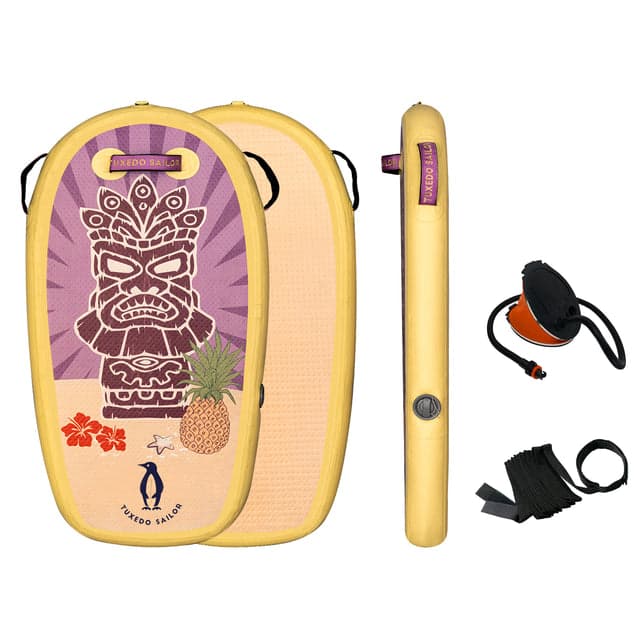 Bodyboard Island PassionFUNWATER · $70.99
 EZY Travel Kit - Better Sleep, Anytime, AnywhereFLEXTAIL · $118.99
 Keen Targhee II Waterproof Hiking Shoe88 Gear · $169.99
How they differ on running cost and upkeep
Inflatable paddle boards cost roughly half as much as comparable hard boards at the premium level: a quality FUNWATER or mid-range iSUP runs $400 to $900, while equivalent hard boards start at $1,200 to $1,500 before adding fins, paddles, or bags. Maintenance costs heavily favor inflatables. An iSUP requires only rinsing with fresh water after each saltwater session and annual application of UV protectant spray; patch kits for minor punctures cost $10 to $20 and take minutes to apply. Hard boards, by contrast, develop stress cracks in fiberglass or carbon shells that require $100 to $300 in professional repair work, and delamination (foam separating from the shell) often means replacement. Inflatable durability improves yearly as manufacturers refine drop-stitch cores and multi-layer PVC—modern military-grade materials survive drops, bumps, and trunk storage that would crack a fiberglass board. Long-term cost of ownership clearly favors inflatables.
How they differ on space, size or setup effort?
Inflatable paddle boards pack into a backpack roughly the size of a rolled tent, fitting car trunks, closets, apartment storage, and even airline luggage for travel to beaches or lakes far from home. Setup time is under five minutes: attach the pump, inflate to the recommended PSI (typically 12 to 18 PSI depending on the model), click on the fin, and paddle. FUNWATER and other iSUP brands ship with hand pumps, electric pump options, and carrying backpacks, making the entire package travel-ready. Hard boards demand permanent storage solutions—roof racks for vehicles, wall racks in garages, or specialty shipping services that cost $150 to $300 for interstate transport. Setup is instant (grab and go), but logistics consume time and money. For paddlers who move frequently, travel with gear, or live in small spaces, inflatables eliminate the friction entirely. Hard board owners accept storage sacrifice for performance.
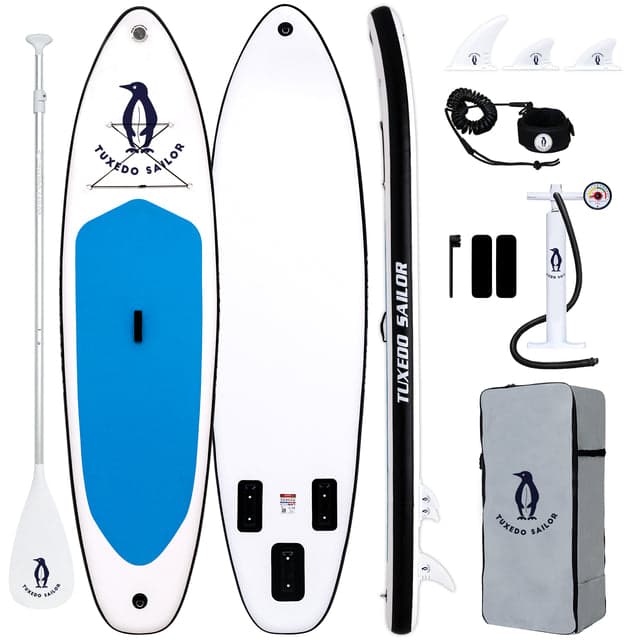 Blue and White 10'6'' Inflatable paddle boardFUNWATER · $499.99
 Free Repellent Mats per month 125mmFLEXTAIL
 Proline Easy-Up Slalom Waterski Handle88 Gear · $89.99
Choose an inflatable if you want portability and value
Inflatable paddle boards suit recreational paddlers, beginners, families, and anyone prioritizing convenience over elite performance. If you lack dedicated storage space, travel frequently, paddle multiple locations, or budget under $1,000, an iSUP is the obvious choice. FUNWATER offers a wide range of inflatable boards at accessible price points, from entry-level all-around designs to touring and specialty shapes, making them a practical starting point for anyone new to the sport. Inflatables excel for yoga on water, fishing trips, fitness sessions, and casual exploration. They also work for rental fleets and group activities because durability and ease of use reduce training friction. If you're buying your first paddle board or rotating between locations, inflate-and-go convenience plus lower cost makes inflatables the smarter investment.
Choose a hard board if you race or chase waves
Hard composite boards suit competitive paddleboarders, dedicated surfers, and athletes chasing measurable speed improvements. If you train for racing events, pursue wave-surfing as a primary activity, have permanent storage solutions, or live near consistent conditions for daily use, a hard board's performance edge justifies its premium price and logistical demands. Carbon and fiberglass construction delivers superior glide, tracking, and responsiveness that separates winners from recreational paddlers in racing formats. Hard boards also dominate in ocean surfing, where rail precision and responsive transitions between edges matter for wave control. These boards reward technique and precision, making them better suited to paddlers with existing skills and clear competitive goals. If you already own an iSUP for general use, owning a hard board as a secondary performance tool makes sense; if you're starting fresh without racing or surfing intent, a hard board wastes money on performance you'll never access.
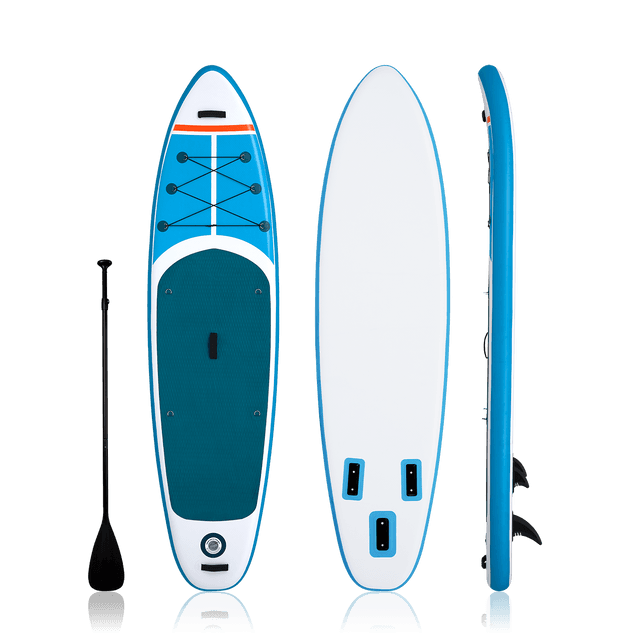 NaviAir Inflatable Paddle Board – Sleek All-Water SUP with Streamlined DesignFUNWATER · $139.99
 Zero Power Metal 5000- World's Thinnest Power BankFLEXTAIL · $32.99
 Proline Sport Package w/ 5 or 8 Sections88 Gear · $59.99
The case for owning both, and when that is overkill
Serious paddle board enthusiasts often own both an inflatable and a hard board: an iSUP for travel, casual paddling, and rental scenarios where durability matters, plus a hard board for performance-focused sessions, racing, or dedicated surfing. This dual approach gives flexibility without compromise—pack the iSUP for family trips or weekend getaways, use the hard board for training or competition. Owning both makes sense if you race regularly, live near multiple paddling locations with different conditions, or have the storage space and budget ($2,000 to $3,500 combined) to justify it. For beginners and recreational paddlers, owning both is overkill. Start with one quality inflatable that covers 95% of your paddling needs, and upgrade to a specialized hard board only if and when racing or wave-surfing becomes a clear priority. Most paddlers never need a second board; committing to one good iSUP pays off faster than splitting budget across two mediocre options.
How to save money on either: seasonal sales and codes?
Paddle board discounts peak at three predictable times: end of season (August to September) when retailers clear inventory for next year's models, Black Friday and Cyber Monday (November), and spring clearance (March to April). End-of-season sales on previous model year boards save 30% to 60% on both inflatables and hard boards, and construction quality remains identical to current stock. Retailers like Amazon, GILI Sports, and specialty paddle board shops routinely offer promo codes for 15% to 30% off, particularly on bundle packages that include pumps, paddles, and carrying bags. FLEXTAIL air pumps, a key accessory for iSUP owners, also appear in bundle deals that reduce per-item cost. Monitor email lists for flash sales and check outlet pages on major retailer sites—outlet boards are usually last year's designs at current-year pricing. Avoid ultra-budget boards under $150, which cut construction corners and become frustrating to own; instead, target mid-range options ($400 to $700 for iSUPs) during sales, which deliver better quality and durability than bottom-tier options and still undercut hard boards significantly.
Mistakes shoppers make when choosing between these two
The most costly error is overvaluing PSI (air pressure rating) as an indicator of board quality. A board with high PSI tolerance feels stiff only if its core construction uses cross-woven drop stitch and multi-layer PVC; PSI alone tells you nothing about performance. Equally common: choosing a board that's too narrow (under 31 inches wide) because it looks sleek, then finding it unstable and frustrating to paddle. Beginners should prioritize width and stability over length or aesthetic appeal. Many buyers also trust weight capacity numbers uncritically; a board that floats 400 pounds may not perform well anywhere near that limit. Another trap: assuming thicker automatically means better, when thickness only matters if you genuinely need added volume for your body weight. Finally, beginners often buy specialized touring or racing boards prematurely, adding difficulty during the learning phase when all-around stability matters more than speed. Start wide, stable, and all-around; narrow down to specialized shapes only after you've developed basic paddling skills and know your actual use case.
- Ignore PSI ratings as a performance indicator
- Choose width (33 inches) over length for stability
- Don't trust weight capacity claims alone
- Skip specialized boards until you have skills
- Avoid single-layer PVC construction
Our top picks

FUNWATER55% off
Wide range of inflatable paddle boards at accessible prices, from all-around to touring models, ideal for recreational paddlers and beginners seeking portability and durability.
Shop FUNWATER →18 FUNWATER coupons →
FLEXTAIL20% off
Air pumps and inflation accessories designed for inflatable boards, offering quality pumps that reduce setup time and bundled discounts when paired with iSUP purchases.
Shop FLEXTAIL →20 FLEXTAIL coupons →
88 Gear65% off
Water sports safety gear including life vests and accessories that complement paddle boarding sessions, particularly for family outings and beginner paddlers.
Shop 88 Gear →16 88 Gear coupons →Frequently asked questions
How long does an inflatable paddle board last?
Modern military-grade PVC iSUPs last 5 to 10+ years with proper care: rinse with fresh water after saltwater use, store in shade, apply UV protectant annually, and use patch kits for punctures. Durability exceeds most hard boards since inflatables survive impacts that crack fiberglass.
Can I use an inflatable paddle board in the ocean?
Yes, inflatables perform well in ocean conditions, especially for casual paddling and exploration. Hard boards remain superior for wave-surfing due to responsiveness, but iSUPs handle chop, currents, and wind acceptably for most recreational paddlers and touring.
What size inflatable paddle board do I need?
Choose at least 32 inches wide (ideally 33) for stability, and 10'6" to 11' long for beginners. Most recreational paddlers benefit from all-around shapes 10' to 11'6" long; touring designs start at 12' and require more balance and skill.
- https://greenwatersports.com/84305/inflatable-vs-hard-paddle-boards-the-definitive-comparison-for-2026
- https://retrospec.com/blogs/gear-guides/inflatable-paddle-boards-vs-solid-why-inflatable-wins-every-time
- https://nixysports.com/blogs/blog/inflatable-vs-hard-paddle-board
- https://www.glidesup.com/blogs/expert-advice/how-to-choose-a-paddle-board-for-beginners
- https://www.pumpedupsup.com/blogs/news/a-beginner-s-guide-to-choosing-a-paddle-board