
What changed this year in at-home testing?
FDA authorization of new home-based screening tools in 2025 and 2026 expanded what women can test from home. Insurance coverage for these kits still varies by plan: some insurers already reimburse home testing as a preventive benefit, while others require a doctor's order first. Test technology itself improved, with advanced DNA sequencing and microbiome analysis replacing older blood-only models. Prices for at-home kits range from under $100 for basic infection screening to $250 for comprehensive hormone or microbiome panels. These changes matter because at-home testing now reaches underserved populations, women uncomfortable with gynecological exams, and those managing chronic vaginal health concerns privately. Faster results and lower prices have made preventive screening accessible outside traditional clinical pathways.




Who each kind of option suits best
At-home test kits fall into three main categories. Infection and STI tests suit women with symptoms—abnormal discharge, pain, or recent exposure—who want same-day privacy without a clinic appointment; most include free telemedicine support if positive. Hormone and fertility tests work best for women planning pregnancy, tracking perimenopause, or monitoring hormone-related symptoms over weeks; these require bloodwork and take 2–5 days. Microbiome tests help women with recurrent infections, unexplained symptoms, or infertility who need detailed bacterial mapping to find root causes that standard tests miss. Budget-conscious shoppers can start with narrow panels testing five common infections. Those seeking peace of mind opt for comprehensive hormone and microbiome analysis. Women with specific health concerns—trying to conceive, managing PCOS, experiencing recurrent yeast infections—benefit from targeted tests that give actionable results, often paired with treatment options. The choice depends on your symptom, timeline, and whether you need actionable medical follow-up or just baseline screening.
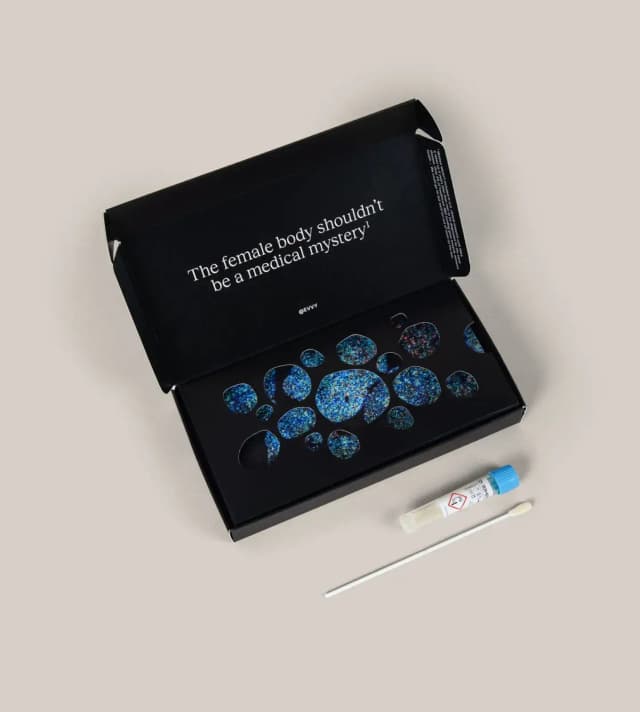 Evvy Vaginal Microbiome TestEvvy
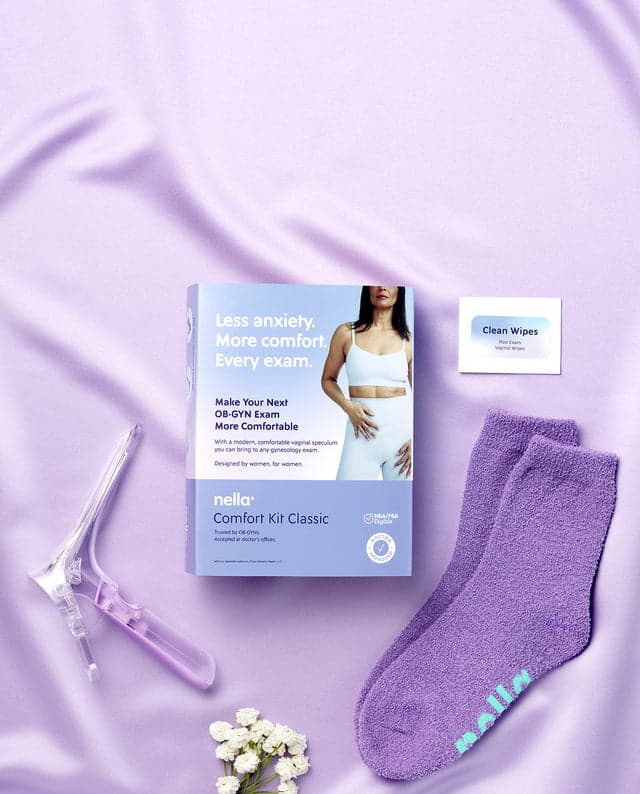 The Nella Comfort Kit Classic (Copy)Ceek Women's Health · $59.00
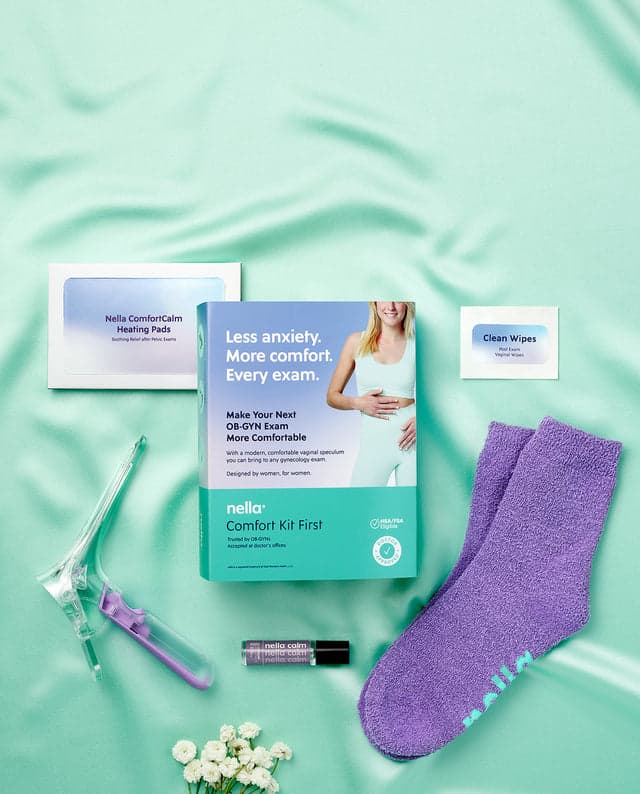 The Nella Comfort Kit FirstCeek Women's Health · $70.00
Best option for most people
For most women, myLAB Box Inc. offers the middle ground between cost and utility. The company's V-Box test costs $189 and screens for the five most common vaginal infection causes—yeast, bacterial vaginosis, trichomoniasis, chlamydia, and gonorrhea—in a five-minute self-collection. Results arrive in 2–5 days. If you test positive, myLAB Box provides free telemedicine and treatment coordination, removing the next-step friction. The company uses CLIA-certified labs, the same standard hospitals follow, so accuracy matches clinic-level testing. For women without urgent symptoms who want a baseline, myLAB Box also sells hormone and fertility panels starting at $249. The brand has tested over 2 million samples since 2014, making it one of the largest direct-to-consumer at-home test providers for women's health. Most buyers find the five-infection panel answers the question they came with—whether a discharge is serious—without overwhelming data. Free follow-up care is rare in this market, which pushes myLAB Box ahead for practical value.
Budget-friendly option
If you are watching costs, myLAB Box Inc. remains the entry point because the V-Box at $189 is one of the lowest prices for a multi-panel vaginal test. For those with insurance, check your plan before buying—some insurers already reimburse part of the cost. Another budget angle: many health systems and employers now offer subsidized at-home test kits through workplace wellness programs, so check your benefits before buying private. If you have specific STI concerns and your partner has been tested, a focused single-panel test from any major provider costs $30–50 less than a five-panel. Timing also matters—prices for at-home test kits often drop seasonally around January (New Year's wellness) and in spring (pre-summer health checks), though no major seller uses coupon codes for these products. The honest truth is that once you choose a brand, the variable cost is the test itself, not shipping or access—all three shortlisted brands include kit delivery and return postage in their quoted price. myLAB Box Inc. competes on price while including treatment follow-up, making it the default budget pick.
Best option for detailed results
Evvy offers the most data-rich testing if you want answers beyond infection. Evvy's Vaginal Health Test costs $159 for basic microbiome sequencing or $248 with expanded STI and antibiotic resistance testing. Instead of testing for just five infections, Evvy's metagenomic sequencing identifies over 700 bacteria and fungi in one swab—the same technology doctors use in research labs. If you have recurrent infections, unexplained discharge, or fertility concerns that standard tests did not explain, Evvy's data often reveals why. The test comes with access to Evvy's treatment program if you need it, which includes prescription medications, symptom relief products, and one-on-one coaching—a feature neither myLAB Box Inc. nor most competitors offer at this price point. Evvy works with researchers at UCSF, Stanford, and Harvard, so results feed into their research database if you opt in, which appeals to women who want their data advancing science. Results still take 2–5 days. The trade-off is the higher price and the reality that more data does not always mean more actionable advice—many women with normal microbiomes still have symptoms. Evvy suits women who have tried standard approaches and want to rule out rare or polymicrobial infections before escalating to specialist care.
What separates these kits from one another?
Sample type and lab method drive the biggest differences. Blood-based hormone and fertility tests from myLAB Box Inc. require a finger stick lancet and take 2–5 days because samples go to certified labs. Swab-based infection tests (myLAB Box Inc. V-Box, Evvy) use a vaginal swab and the same timeframe. Ceek Women's Health sits outside this group—it is not a test kit at all but a medical device, the Nella NuSpec speculum, used during in-clinic exams by your provider. Ceek's speculum is made from medical-grade polymer, quieter than metal speculums, and expands sideways rather than downward, reducing discomfort during pelvic exams. It is not for home use. Detection breadth matters too: myLAB Box Inc. V-Box tests five pathogens; Evvy's basic test screens 700+ organisms using DNA sequencing. Turnaround is similar across brands (2–5 days), but Evvy explicitly includes treatment support and coaching in higher-tier packages, while myLAB Box Inc. offers free telemedicine only if you test positive. Certification is uniform—all shortlisted brands use CLIA-certified labs. The real separator is data depth: narrower panels cost less but answer fewer questions; microbiome sequencing costs more but reveals bacterial dominance and antibiotic resistance patterns that infection panels cannot detect.
- Blood samples: finger stick, 2–5 days, myLAB Box hormone panels
- Vaginal swabs: self-collection, 2–5 days, myLAB Box V-Box and Evvy
- Microbiome vs. infection: Evvy screens 700+ organisms; myLAB Box V-Box covers 5 pathogens
- Follow-up care: Evvy includes coaching; myLAB Box offers telemedicine if positive only
- Ceek Women's Health: provider-used speculum, not a home test kit
What is worth skipping
Skip home tests if you have acute symptoms like severe pelvic pain, fever, or heavy bleeding—those need urgent clinic care. Marketing claims about 'hormonal balance' or 'wellness optimization' often outpace evidence; a test showing normal hormones does not automatically need fixing. Some vendors push monthly subscription testing as 'routine monitoring,' but medical guidelines do not recommend monthly screening for asymptomatic women, and the cost adds up. Ceek Women's Health is a provider tool, not a home product, so if marketing positions it as a home kit, that is misleading—only gynecologists can use it during office visits. Avoid any test kit claiming results without certification from CLIA or CAP (College of American Pathologists); these are non-negotiable standards. 'Expanding your microbiome' test subscriptions that bill monthly for 'rebalancing' bacteria are not standard medical care and often overlap with naturopathic marketing. The simplest mistake is buying a comprehensive hormone panel when you just need infection screening—that wastes money and delays answers. Home tests for rare pathogens (viral vaginitis, for example) are available but rarely necessary unless your provider specifically suspects them; standard panels cover 90% of real clinical need.
How and when to save money on these tests?
The biggest potential savings come from insurance: coverage varies by plan and insurer, so check your current plan now—some insurers already cover kits as a preventive wellness benefit. Self-pay pricing is $159–$249 per test, and very few brands discount these directly. myLAB Box Inc. occasionally runs limited-time promotions bundling multiple tests (e.g., hormone plus infection panel) at a lower combined rate than separate purchases, so sign up for their email list if you plan to test more than once. Evvy offers a membership option: three tests per year at $99 each instead of $159 one-off, saving $180 annually if you test regularly. Workplace wellness programs frequently subsidize at-home tests, sometimes reducing your cost to $49–$99 per test, so check with your HR department first. Some tests are eligible for health savings account (HSA) or flexible spending account (FSA) contributions, effectively pre-taxing the cost. Seasonal pricing shifts happen around January and May, but no brand publishes these in advance. Coupon codes and discount codes specific to these test brands are uncommon because the products are clinical and price-controlled. The honest take: your best saving is preventing repeat testing through a thorough, accurate initial test and following through with results.
What mistakes should you avoid when ordering?
The biggest mistake is ordering without knowing what you are testing for—generic 'women's health' panels are marketing, not medicine. Start with a specific symptom or question: 'I have discharge' (infection panel), 'I want to conceive' (fertility hormone panel), or 'I have recurrent infections' (microbiome test). A second trap is choosing based on price alone and ignoring what the panel actually covers; a $89 kit testing only chlamydia will not tell you if you have yeast or bacterial vaginosis, even if symptoms match all three. Do not assume at-home tests replace doctor consultations; they generate data, not diagnoses. If Evvy or myLAB Box Inc. results come back positive, you still need follow-up care—kits are not standalone treatments. Ordering during peak times (January, right after holiday stress conversations) leads to longer processing waits; many brands warn of 7–10 day delays during February through March. Failing to collect samples correctly ruins results—most kits include detailed instructions, and skipping those steps is common. Some people buy tests assuming they will immediately discuss results with a doctor; most kits come with a written report only, not a consultation (though myLAB Box Inc. offers telemedicine if positive). Finally, avoid multiple tests at once unless you are specifically trying to troubleshoot something; testing for hormones, infections, and fertility simultaneously creates noise and costs more without improving clarity.
- Order without a specific symptom or goal (infection, fertility, microbiome)
- Choose by price alone without checking what the panel covers
- Assume tests replace doctor visits; they generate data, not diagnoses
- Order during peak times (January–March); expect 7–10 day delays
- Fail to follow sample collection instructions exactly
- Buy multiple tests at once unless troubleshooting a specific issue
Our top picks

myLAB Box Inc.40% off
Most practical for symptom screening: $189 V-Box tests five common vaginal infections with free telemedicine if positive, CLIA-certified results in 2–5 days, and no subscription needed.
Shop myLAB Box Inc. →15 myLAB Box Inc. coupons →
Evvy35% off
Best for recurrent infections and fertility mysteries: microbiome sequencing identifies 700+ bacteria, includes treatment coaching, and costs $159 basic or $248 with STI expansion.
Shop Evvy →15 Evvy coupons →
Ceek Women's Health40% off
For provider use only: medical-grade speculum for in-clinic pelvic exams, quieter and less uncomfortable than traditional metal speculums, modern design for 150-year-old tool.
Shop Ceek Women's Health →15 Ceek Women's Health coupons →Frequently asked questions
Are at-home women's health tests covered by insurance?
Coverage varies by plan and insurer. Some insurers already reimburse home testing kits as a preventive wellness benefit, while others require a doctor's referral first, so check your specific plan before buying. Self-pay costs are $159–$249 per test.
How accurate are at-home test kits versus clinic tests?
Accuracy is equivalent when labs are CLIA-certified, the gold standard. myLAB Box Inc. and Evvy both use certified labs. Collection method matters—follow instructions exactly. Microbiome tests like Evvy provide more data than traditional culture-based tests, but 'more data' does not always mean more actionable results.
What if my test result is positive—do I need a doctor?
Yes. Test kits generate data, not diagnoses. If myLAB Box Inc. or Evvy results are positive, use their included telemedicine or contact your doctor for confirmation and treatment. Some infections require prescription medication or monitoring.
- https://femtechinsider.com/mylab-box-at-home-womens-health-and-fertility-test-review-everything-you-need-to-know-2025/
- https://www.labcorp.com/education-events/articles/advancing-womens-health-through-precision-testing-how-evvy-closing-gender-health-gap
- https://www.wweek.com/culture/2020/02/12/a-portland-healthcare-company-is-giving-the-speculum-its-first-redesign-in-150-years/
- https://www.getteal.com/insurance-coverage
- https://shop.equinox.com/products/evvy-vaginal-health-test-expanded-pcr-panel