
Why first-time buyers go wrong
Most people buy the cheapest stock mouthguard, assume it will work because it came in their size, and stop wearing it within a week. Stock guards come in only small, medium, and large—no actual fitting to your mouth shape. They fall out constantly, feel loose, and require jaw clenching to stay in place, which causes fatigue and defeats the purpose. Night guard shoppers make a different mistake: buying one-size-fits-all without checking whether it covers all teeth or reaches the gum line properly. A guard too small leaves back molars exposed to grinding damage; one too large interferes with breathing and sleep. The third common error is choosing hard acrylic for mild grinding, which causes morning jaw pain, or soft silicone for severe grinding when the guard gets chewed through in weeks. Paying attention to three things—type (stock, boil-and-bite, or custom), material thickness, and fit method—saves you from buying twice.
- Stock guards fall out and require constant jaw clenching
- Night guards sized too small leave molars unprotected
- Hard material for mild grinding causes jaw soreness
- Soft material for severe grinding gets chewed through



What type of guard do you actually need?
The first decision is whether you need a sports guard, a night guard for teeth grinding, or both. Sports mouthguards protect teeth and jaw from impact during contact sports; night guards prevent teeth damage from clenching and grinding during sleep—a different problem requiring different design. Night guards sit only on upper teeth and keep your jaw relaxed; sports guards must stay in place under impact and contact. If you grind at night, a sports guard will not help; if you play contact sports, a night guard offers no impact protection. Some people need both: a sports guard for daytime and a night guard for sleep. Once you choose the category, pick the right type: stock (least expensive, worst fit), boil-and-bite (affordable, moderate fit), or custom (highest cost, best fit). Athletes changing sports or with developing teeth often choose boil-and-bite for flexibility; serious athletes and people with severe bruxism choose custom for precision fit and material quality that lasts longer and protects better.
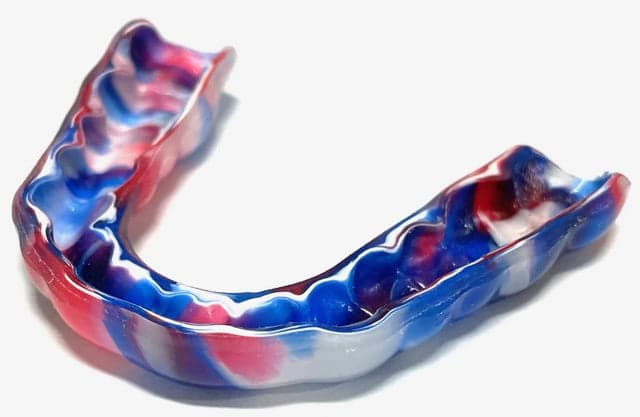 Limited Time Holiday Edition: Make it a Patriot Guard! Red, White & Blue.Teeth Grinding Guards · $19.99
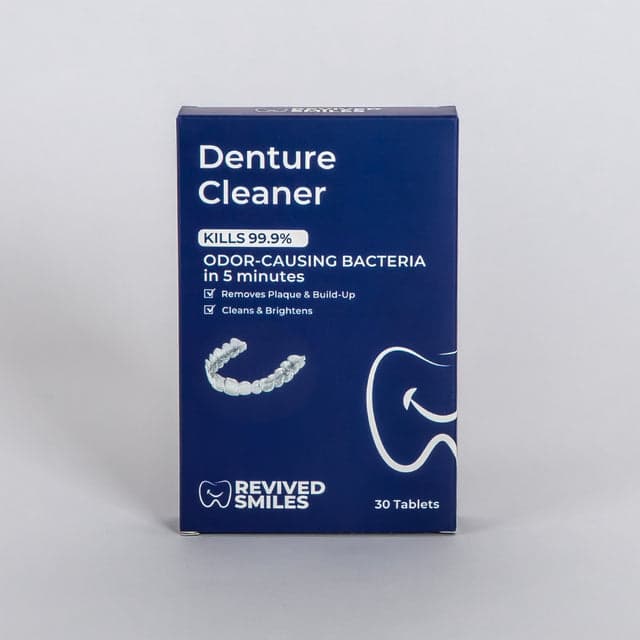 Revived Smiles Cleaning TabletsRevived Smiles · $19.99
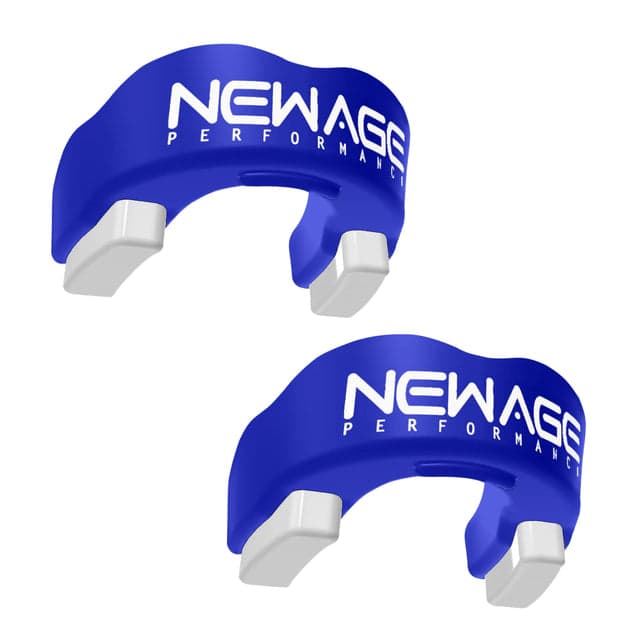 5DS Low Profile Mouthguard Bundle - Buy 2 Get FREE ShippingNew Age Performance · $79.90
Materials and thickness: what actually stops impact?
Mouthguards are made from EVA (ethylene vinyl acetate), thermoplastic, silicone, or combinations. EVA is the industry standard because it absorbs shock well and can be layered for increased protection without becoming rigid. Thermoplastic is used in boil-and-bite guards—it softens in hot water so you mold it to your teeth, then hardens when cooled. Thickness matters more than brand name. Guards should be 2–4 mm thick in the front where impact happens most. Here is a critical fact almost no one knows: mouthguards thin by 30–60 percent during molding. If you buy a 4 mm blank and mold it at home, it may end up closer to 1.6 mm in the critical front area—not enough for high-impact sports. Custom dental guards use layered EVA to maintain proper thickness after hardening. For night guards, thickness matters less for impact but more for durability: thicker guards (2–3 mm) resist chewing and last longer; thinner ones get damaged faster. Material choice also matters: soft silicone is comfortable but wears out quickly; hard acrylic resists wear but can cause jaw soreness; EVA-based materials offer decent durability and comfort.
- EVA is the standard: absorbs shock and can be layered
- Thermoplastic softens in hot water for custom molding
- Guards thin 30–60% during boil-and-bite molding
- 2–4 mm thickness needed in front for impact sports
- Thicker night guards (2–3 mm) last longer against chewing
What trade-offs should you accept?
There is a real trade-off between protection and comfort. Thicker guards protect better but feel bulkier, make speaking harder, and feel strange the first week. Thinner, flexible guards allow better breathing and feel lighter, but reduce protection against harder impacts. For sports, choose protection over slight discomfort because the cost of a chipped tooth or jaw injury far exceeds mild annoyance of a bulkier guard. For night guards, the opposite is true: a guard so uncomfortable you remove it during sleep offers zero protection, so comfort is the limiting factor. You can safely skip sport-specific colors, removable chin straps (unless playing collision sports), and marketing-heavy brand names. What you cannot skip: proper fit to your mouth and material quality. A $25 boil-and-bite that fits well is more effective than a $50 stock guard that wobbles. Fit comes from type (boil-and-bite or custom mold better than stock), not price. Material quality comes from thickness and layering, not brand prestige. Revived Smiles and New Age Performance offer sports and night guard options at varying price points, with custom solutions if you want professional-grade protection.
 New Mexico HeadbandSLEEFS LLC · $15.00
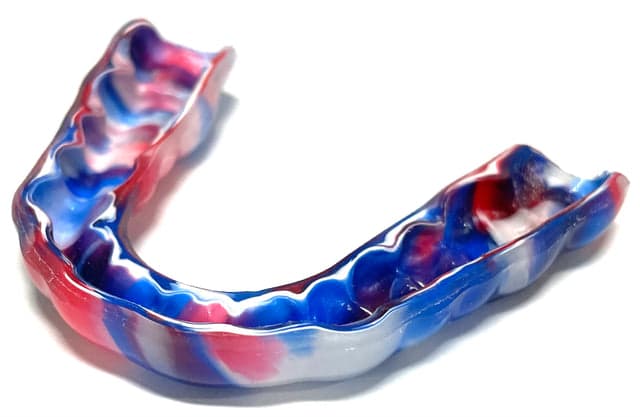 Limited Time Holiday Edition: Make it a Patriot Guard! Red, White & Blue.Teeth Grinding Guards · $19.99
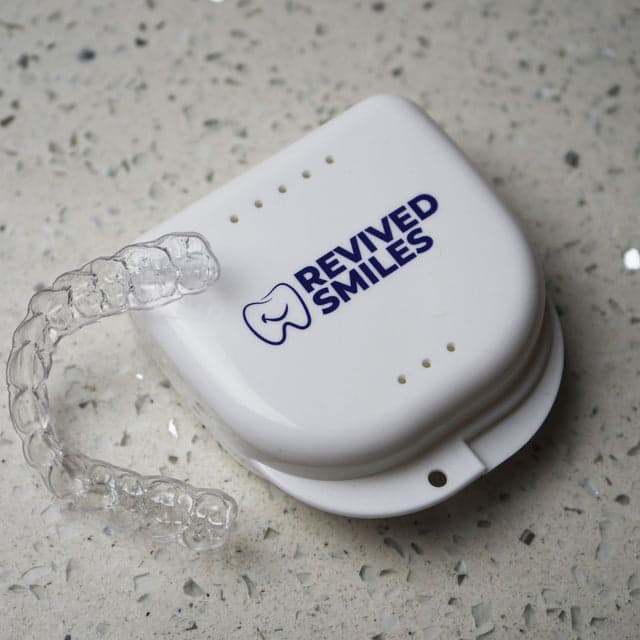 Essix RetainerRevived Smiles · $139.99
How do you get the fit right the first time?
Fit is the most important factor in whether your guard actually works. When you insert it and close your mouth gently, it should stay seated without jaw clenching. If you must squeeze continuously to keep it in place, the fit is wrong. Open your mouth: the guard should remain on your upper teeth without falling. For boil-and-bite guards, the molding process is simple but easy to rush. Soften the guard in hot water (160–180°F, not boiling) for 20–30 seconds, insert it centered on your front teeth, and bite down moderately—not with maximum force, which compresses the shock layer. Suck strongly to pull it tight against teeth and gum line for 15–20 seconds, then move to very cold water for 30 seconds to set. For night guards, correct fit means full coverage: the guard should reach your gum line and cover all upper teeth, especially molars where grinding causes the most damage. If it slides toward the front or only covers front teeth, it is not sized right. Teeth Grinding Guards offers custom options if over-the-counter sizing does not work. SLEEFS LLC carries kids' football mouthguards for young athletes. When you try any new guard, wear it during low-stakes situations (watching TV) before trusting it during actual sports or sleep.
Which brand fits your specific need?
If you play contact sports and want fast, affordable protection, a boil-and-bite guard is the standard choice: it balances cost ($20–50), fit quality, and durability. New Age Performance sells mouthguards and mouthpieces that fit this category for athletes who want decent protection without a dentist appointment. If you grind your teeth at night and have not tried a guard before, start with a boil-and-bite night guard in the $20–40 range to see if you like wearing one; many people sleep better once they adjust. Teeth Grinding Guards specializes in custom teeth night guards across price ranges ($15–200), making them a direct fit for anyone serious about protecting their teeth from bruxism. If you play high-impact sports like boxing or hockey, or have already damaged teeth, pay for a custom guard (typically $200–400) for precise fit and guaranteed material thickness. If you grind so severely you have destroyed previous guards by chewing through them, choose a custom guard with harder materials that will outlast boil-and-bite options. If you have braces, buy a thinner, more flexible silicone-based boil-and-bite guard because standard guards cannot fit over brackets. If you are under 14 years old and still losing baby teeth, buy a boil-and-bite you can remold every 6–12 months rather than custom. Revived Smiles carries sports mouthguards and nightguards for different protection levels and dental situations.
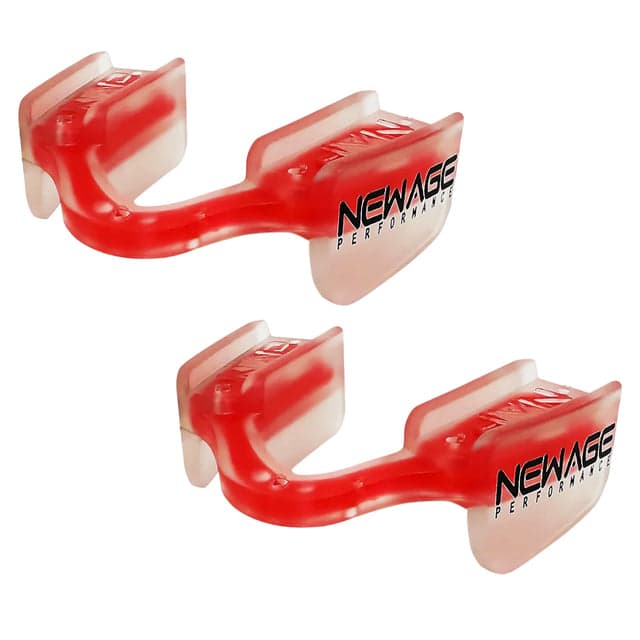 6DS Low Profile Bundle - Buy 2 Get FREE ShippingNew Age Performance · $79.90
 Jesus Christ HeadbandSLEEFS LLC · $15.00
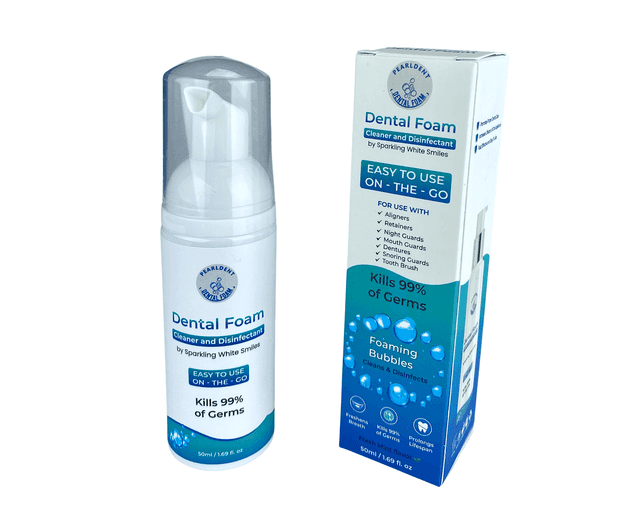 Pearldent Dental Foam - Cleans and Sterilizes Removable Dental and Ortho Appliances - Up to 4 Months Supply. Great for Aligners, Retainers, Mouth Guards.Teeth Grinding Guards · $19.99
What separates good value from cheap options?
A $15 stock guard is not 80 percent less valuable than a $75 boil-and-bite—it is a different product category with lower protection and worse fit. Stock guards are preformed with no customization; you get what the manufacturer decided, and most mouths do not match. Boil-and-bite guards are custom-molded by you and use better materials; they fit your teeth and last 1–2 years. Custom dental guards made by a dentist use professional-grade EVA or acrylic, maintain proper thickness, and last 2–3 years. What separates good from cheap: Material consistency—guards that thin excessively offer false protection. Full coverage—does it reach the gum line and protect molars, or only front teeth? Fit retention—does it stay in place without clenching, and does it feel the same after one month? Brand names matter insofar as they build reputation through quality materials. Teeth Grinding Guards has built brand reputation in the night guard space; Revived Smiles offers both night and sports options; New Age Performance carries sports mouthguards alongside athletic accessories. Most boil-and-bite guards in the $25–45 range offer similar protection if molded correctly; the difference is customer support and material longevity. For night guards, value goes to the guard that stays intact longest and fits comfortably enough to wear every night—price alone does not signal this.
When do prices drop and what discounts actually cover?
Mouthguard prices are generally stable year-round because they are small, low-volume items. Athletic brands sometimes run seasonal promotions in August and September when youth sports leagues begin, with 10–20 percent discounts on boil-and-bite guards. Team bulk purchases lower per-unit cost, but individual buyers cannot access those deals. Custom dental guards almost never go on sale because dentists price them by material and lab work cost. Night guard brands occasionally run promotions during New Year (resolution period) or spring, with discounts typically 15 percent off. What a discount code realistically covers depends on the vendor. Some codes reduce the base price by percentage; others waive shipping on orders over a minimum. Very rarely, a dental lab offers first-time customer discounts (often $20–40 off custom orders) to build customer base. Check whether the discount applies to your specific product—some codes exclude expensive items or only work on certain brands. A 20 percent discount on a $30 boil-and-bite saves $6; on a $300 custom guard saves $60. For night guards ordered online, shipping sometimes exceeds discount savings; look for free shipping thresholds or combine with other dental items if possible.
What mistakes should you avoid?
The first mistake is over-molding a boil-and-bite by clamping down with maximum bite force. You think a tighter fit is better, but hard biting compresses the shock-absorbing inner layer to nearly nothing, leaving a thin shell with almost no protection. Bite down firmly enough to take an impression, not like you are crushing something. Second: using boiling water instead of hot water to soften the guard. Boiling temperatures can warp or melt thermoplastic permanently. Use water just hot enough you can hold a test drop without burning yourself—160–180°F approximated by letting boiling water cool 30 seconds. Third: cleaning with harsh chemicals, bleach, or hard toothbrush. Use lukewarm water, soft brush, and mild soap. Never soak in bleach long-term. Fourth: storing in a closed, damp container. This promotes mold and bacteria. Rinse thoroughly, pat dry with soft cloth, and store in a ventilated case. Fifth: ignoring growing discomfort or pressure points. A guard that hurts today will still hurt in two weeks—it does not break in like shoes. If pain continues beyond three days, the fit or material hardness is wrong. Sixth: buying a night guard without checking whether it covers all your teeth. Seventh: expecting a $20 guard to feel like a $300 custom guard. Boil-and-bite guards need genuine adjustment time; wear during low-stakes situations first.
- Over-molding with maximum force crushes the shock layer
- Using boiling water warps or melts the thermoplastic permanently
- Harsh chemicals and bleach degrade material and reduce lifespan
- Storing in closed, damp containers promotes mold and bacteria
- Ignoring pain beyond day 3 means the fit is wrong
- Night guards must cover all teeth, not just the front
Our top picks

Teeth Grinding Guards65% off
Specializes in custom teeth night guards and grinding solutions across price ranges ($15–200). Directly addresses bruxism with options for different severity levels.
Shop Teeth Grinding Guards →15 Teeth Grinding Guards coupons →
Revived Smiles25% off
Offers both sports mouthguards and nightguards ($20–805 range), serving athletes and sleep-quality seekers with varied protection needs and budgets.
Shop Revived Smiles →15 Revived Smiles coupons →
New Age Performance40% off
Carries mouthguards and mouthpieces ($20–200) for athletes, fitting the sports guard category with options alongside athletic accessories.
Shop New Age Performance →15 New Age Performance coupons →SLEEFS LLC80% off
Specializes in athletic gear including kids' football mouthguards ($5–16), serving young athletes and parents who need affordable, sized protection.
Shop SLEEFS LLC →15 SLEEFS LLC coupons →Frequently asked questions
How often should I replace my mouthguard?
Boil-and-bite guards last 1–2 years with regular care. Replace sooner if material thins, cracks appear, or fit loosens. Night guards last 2–3 years unless chewed through faster. Custom guards typically last 2–3 years if materials hold up well.
Can I use the same guard for sports and sleeping?
No. Sports guards must stay in place under jaw movement and impact; night guards are designed to keep your jaw relaxed. Using a sports guard at night causes jaw strain, and a night guard offers no impact protection. Buy the right guard for each use if you need both.
Will a mouthguard affect my speech or breathing?
Initially, yes—speaking feels slightly different for 1–2 weeks. Thinner guards affect you less than thicker ones. Breathing through your nose remains normal; mouth breathing during sports may feel slightly restricted. Most people adapt within a few days with proper fit.