
What changed this year and why it matters
The 2026 golf equipment market is experiencing one of the most competitive club-launch seasons ever, with new models substantially outperforming older equipment in ways that weren't true over the previous four to five years. Advanced materials like tungsten weighting, dual perimeter weighting systems, and newly engineered face technologies are enabling manufacturers to blend soft feel with explosive ball speeds. The trend toward hybrid clubs continues to grow, reflecting how the game has evolved. Most importantly for buyers right now: custom fitting has become critical. Getting fit properly can increase distance by an average of 10 yards—far more than switching to a premium brand without the right shaft, length, lie angle, loft, and grip for your swing. Prices are rising across key categories, but used equipment and direct-to-consumer brands offer ways to access premium technology at lower cost. The takeaway is that 2026 rewards golfers who invest time in fitting over those who simply chase the newest name.



Who each kind of option suits best
Beginners need forgiveness and ease of use—larger clubfaces, shorter shafts, and simpler designs that help correct mishits and let you learn faster. Look for complete sets in the $300–$450 range that include driver, irons, wedges, putter, and bag. Intermediate players with consistent swings benefit from clubs that balance control and forgiveness, allowing you to shape shots while maintaining distance. Consider individual club upgrades rather than full sets once you know your gaps. Low-handicap and tour-level players want maximum feel, workability, and precision, often requiring custom fitting and tour-grade materials. Budget shoppers don't need to sacrifice performance: DTC (direct-to-consumer) iron sets deliver launch monitor performance comparable to premium brands at $550–$600 instead of $1,000+. Players upgrading slowly should focus on the clubs you use most—driver and irons first—before worrying about specialty wedges or putters. Those returning to the game after years away should prioritize fit over nostalgia for older equipment.
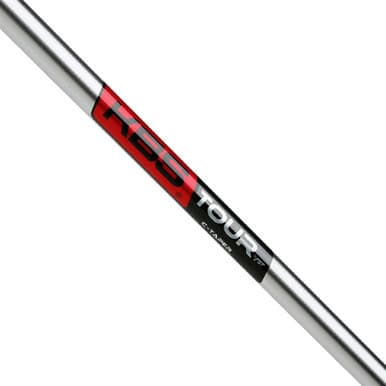 KBS C-Taper 95 Steel, R-Flex (Wedge)MacGregor Golf
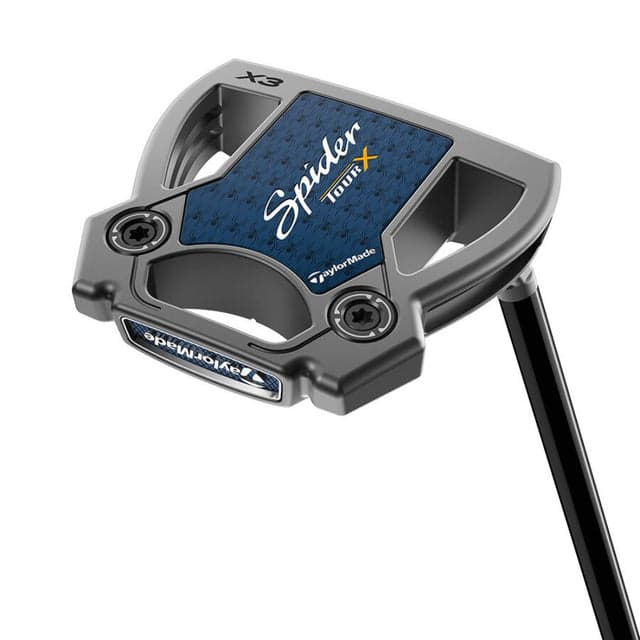 TaylorMade 2024 Spider Tour X PutterClub 14 Golf · $349.99
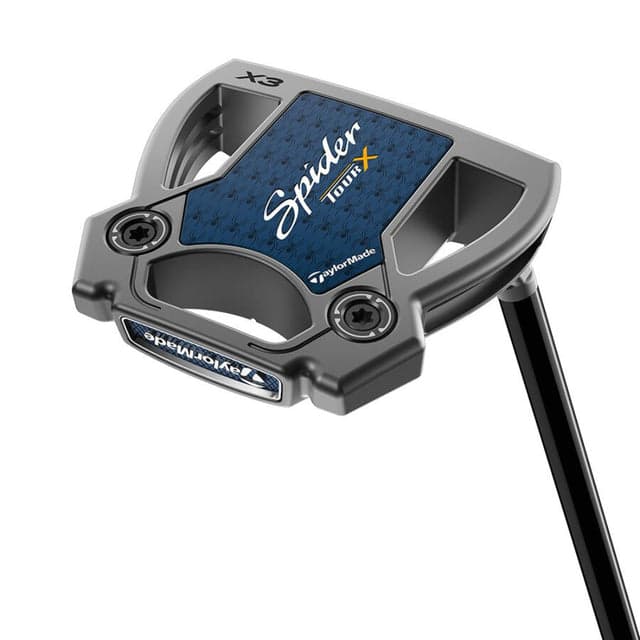 TaylorMade 2024 Spider Tour X PutterGolfDirectNow.com · $349.99
Best clubs for most people: quality without compromise
MacGregor Golf stands out as the most balanced choice for golfers across most handicap ranges, offering direct-to-consumer pricing on complete sets ($349.99–$499.99) and individual clubs that perform well on launch monitors without premium markups. Their Tourney MAX Driver ($249.99) earned recognition as MyGolfSpy's best driver under $400, and their MACSPD Irons ($124.99–$659.99) provide options from beginner-friendly to tour-forged quality. Club 14 Golf rounds out the category by stocking a comprehensive range from drivers through putters, complete sets, and specialty wedges across multiple brands including Callaway, TaylorMade, Titleist, and Ping, with pricing from $30 to $1,300 to suit different budgets. GolfDirectNow.com covers the middle ground with a similar breadth of brands and categories, plus a physical showroom in West Chicago offering fitting and repair services for those who want expert guidance before buying online.
Best clubs on a tight budget: performance without premium prices
Direct-to-consumer brands have compressed the price-to-performance gap dramatically. Complete starter sets from MacGregor Golf start at $349.99, while used equipment allows you to play premium gear for a fraction of original cost. A solid used set runs $600–$1,800 depending on age and condition, versus $1,500–$3,500 for new equivalent setups. Club 14 Golf's inventory includes options in the lower end of their range for golfers prioritizing cost. Budget drivers ($200–$250 models) can match ball speed performance for swing speeds under 100 mph if loft and shaft fit correctly, meaning you don't need a $400+ driver to see real distance. Consider complete sets in the $300–$450 range—they're built to a price with generic shafts and basic gapping, but for beginners or casual players who hit only a few rounds yearly, they're sufficient. Avoid premium sets over $1,000 unless you're serious about the game: the performance gap between a $500 set and a $1,200 set for beginners is minimal. Golf Division's manufacturer-direct model (they own brands like MacGregor, Ram, and Prosimmon) eliminates middlemen, letting junior sets start at $59.99.
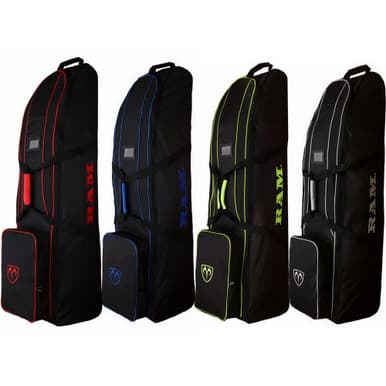 Ram Golf SDX Wheeled Golf Travel Cover / Flight BagGolf Division
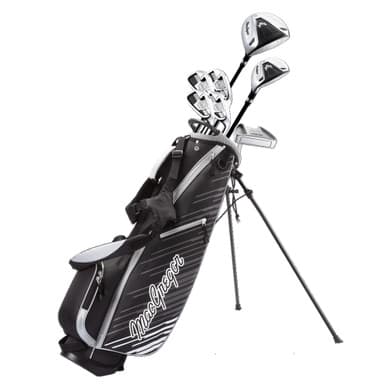 MacGregor V-Max Junior Package Set, Left Hand, Boys, 12-14 YearsMacGregor Golf
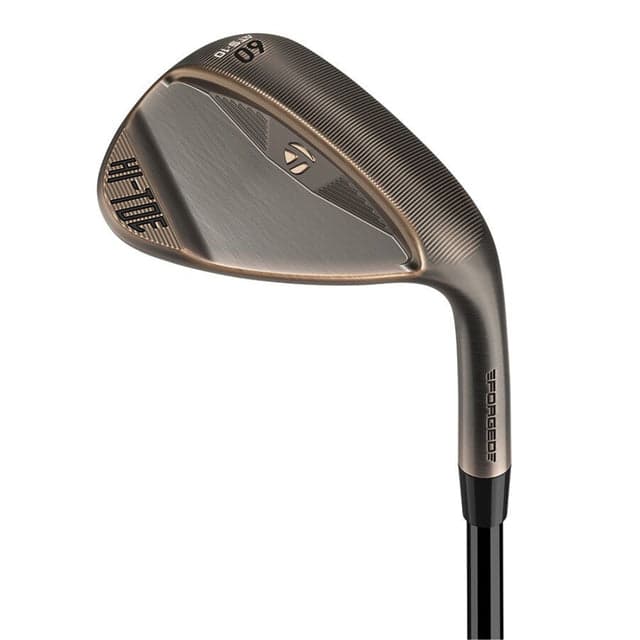 TaylorMade Hi-Toe 5 Wedges Steel ShaftClub 14 Golf · $199.99
Best clubs when you want extra features and technology
Players willing to invest in premium equipment access advanced materials and precision engineering that make measurable differences in consistency and distance. 2026 irons now incorporate the highest legally allowed coefficient of restitution (COR), dual perimeter weighting systems, and face technologies like Srixon's MainFrame that increase ball speed and forgiveness. Tungsten weighting positioned low in the clubhead improves launch and stability. Club 14 Golf carries top-tier models from Callaway, TaylorMade, Titleist, Ping, and Cobra where these features concentrate. Smart sensors in modern drivers gather real-time data on swing speed, launch angle, and ball spin, giving you actionable feedback. Custom fitting through specialists like True Spec Golf—the worldwide leader in custom club fitting with 40+ studios—positions tungsten exactly where your swing needs it and ensures shaft, length, and loft match your mechanics perfectly. Some manufacturers use 3D printing technology to customize irons with specific amounts of bounce based on each golfer's dynamic loft, a level of personalization not available in off-the-rack equipment. GolfDirectNow.com's West Chicago showroom offers fitting services that guide you toward which premium features actually benefit your swing.
The specs and materials that separate clubs from each other
Coefficient of restitution (COR) measures how much energy the clubface returns to the ball—higher COR means more distance. 2026 irons are now designed at the legal limit, so COR differences between brands are minimal; other factors matter more. Clubhead materials drive performance: i-ALLOY steel (Srixon) delivers soft feel, while Nickel Chromoly blended with engineered face patterns like Contour Ellipse adds forgiveness. Tungsten weighting—placing heavier material at strategic points in the head—lowers center of gravity and improves stability on off-center hits, a feature in premium models from major manufacturers. Perimeter weighting distributes mass around the clubhead's edges to expand the sweet spot; dual perimeter weighting combines this with face-center reinforcement for balance. Shaft material and flex matter enormously: steel shafts are heavier and suit faster swings, while graphite is lighter and helps slower swingers generate speed. Grip size and type affect control and comfort, especially for players with arthritis or smaller hands. Loft and lie angle—the club's angle relative to the ground—must match your swing mechanics to put the ball on your target line consistently. Length affects both distance potential and control: standard irons are 38–39 inches, but some golfers swing better with 37-inch or 39-inch specs. Forgiveness comes from larger clubheads (460cc drivers are standard now, up from 400cc a decade ago) and perimeter-weighted designs that reduce the penalty for mishits. MacGregor Golf's products span these variables across price tiers, letting you prioritize which features matter most.
 TaylorMade Tour Golf Towel - White 24" X 42" - NewGolfDirectNow.com · $24.95
 Dynamic Gold S300 Steel ShaftGolf Division
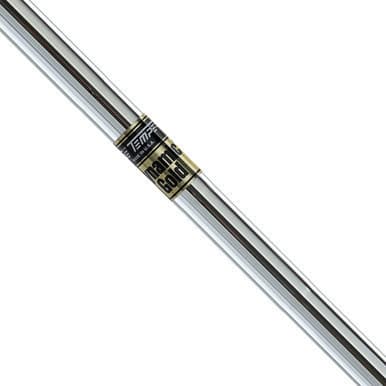 Dynamic Gold X100 Steel Shaft X Flex (Wedge)MacGregor Golf
What is safe to skip and where marketing often misleads
Brand names alone don't determine performance: a $1,500 club set from a famous brand without proper fitting will underperform a $600 set tailored to your swing. Ignore marketing claims about 'revolutionary' materials unless independent testing (like launch monitor data) backs them up; golf equipment marketing often recycles the same innovations across multiple generations with new names. You don't need the newest gear: clubs from three to five years ago still perform exceptionally well, and buying older stock lets you play premium equipment at huge discounts. Tour-only specs make headlines but serve only the 0.1% of golfers with tour-level swings; equipment marketed as 'tour-tested' usually means it was used in advertising, not that it suits your game. Grip color and cosmetics add cost but zero performance—a $5 grip change won't improve your score. Avoid bundles mixing high-quality and low-quality clubs just to hit a price point; better to buy fewer, better-matched clubs. Claims about 'maximum forgiveness' at the highest price are marketing: forgiveness improvements plateau quickly, and a $800 driver isn't 50% more forgiving than a $400 driver. Golf Division and MacGregor Golf's direct-to-consumer model strips away these inflated margins, letting you see actual value more clearly. The biggest skip: buying a complete set if you already play well—upgrading only the clubs you hit most often (driver and irons) delivers better results than replacing everything.
How to save money: timing and what discounts realistically cover
New club models launch twice yearly—spring and fall—meaning previous-year inventory drops in price afterward. Buying just before a major launch (usually February and August) gets you deep discounts on perfectly capable equipment. Direct-to-consumer brands like MacGregor Golf and Golf Division eliminate retail markups by selling factory-direct, passing savings to you without requiring coupons. Used equipment is the biggest money-saver: a premium set resold after one season typically costs 40–50% less than new, and performance loss is negligible. Online retailers like Club 14 Golf and GolfDirectNow.com price competitively because they don't maintain physical showrooms everywhere, meaning online-exclusive pricing often beats brick-and-mortar. Watch for bundle deals on complete sets during January–February (New Year resolutions) and Black Friday (November); these periods see the most aggressive pricing. Individual club upgrades are cheaper spread over time than replacing a full set annually. Build-to-order custom clubs sometimes have lower startup costs than buying off-the-rack at the same quality level. Shipping is free over certain order minimums at most retailers, incentivizing bundling items to cross that threshold. Avoid artificial 'sales' of popular models that have simply been marked up before discount—check price history or independent retailer sites to confirm actual historical pricing. Warranties typically run 12 months and cover manufacturing defects but not wear or damage; this is consistent across brands, so warranty length isn't a differentiator worth paying extra for.
Common mistakes and how to avoid them
The biggest mistake is buying without fitting. A higher-priced club with the wrong shaft, length, lie angle, or loft will still underperform your current set, even if it costs twice as much. Get fit—even a basic fitting—before spending over $500. Chasing the newest release every year wastes money: golf technology improves gradually, and a well-maintained three-year-old set still performs within 5% of current gear. Buying a full set when you're happy with some clubs is inefficient; upgrade clubs individually as they wear out or as your swing changes. Ignoring shaft flex is common among beginners: a regular flex shaft doesn't suit every golfer, and swinging the wrong flex costs distance and consistency. Assuming premium brands are always better leads to paying for logo, not performance. True Spec Golf's fitting experience highlights that fit—not brand—drives results. Copying a tour player's clubs won't improve your game; tour equipment is built for tour swings, not amateur swings. Overlooking used equipment as legitimate ignores a huge cost-saving opportunity. Buying clubs based on look alone (color, sparkly finishes) instead of function means prioritizing cosmetics over the specs your swing needs. Misunderstanding handicap-appropriate clubs: a beginner swinging a set designed for scratch golfers will struggle, while a low-handicap player using super-forgiving cavity-back irons will lose precision and feedback. Finally, neglecting to store clubs properly (extreme temperature swings, moisture, careless storage) degrades grips and finishes quickly, shortening equipment life needlessly.
Our top picks

MacGregor Golf30% off
Direct-to-consumer pricing on complete sets ($349.99–$499.99) and individual clubs from drivers to irons, with no retail markup. Tourney MAX Driver earned best-under-$400 recognition from MyGolfSpy.
Shop MacGregor Golf →20 MacGregor Golf coupons →
Club 14 Golf40% off
Comprehensive range from $30 to $1,300 covering drivers, irons, wedges, putters, and complete sets across major brands (Callaway, TaylorMade, Titleist, Ping, Cobra) for any budget.
Shop Club 14 Golf →15 Club 14 Golf coupons →
GolfDirectNow.com74% off
Broad inventory of men's, women's, and junior clubs plus pre-owned options. West Chicago showroom offers in-person fitting and club repair services for buyers who want expert guidance.
Shop GolfDirectNow.com →15 GolfDirectNow.com coupons →
Golf Division30% off
Manufacturer-direct model selling owned brands (MacGregor, Ram, Forgan) at factory prices without middlemen. Junior sets start at $59.99, premium irons reach $1,049.99.
Shop Golf Division →15 Golf Division coupons →Frequently asked questions
Do I really need a custom fitting, or is it just marketing?
Custom fitting is backed by real data: golfers gain an average of 10 yards from proper fit. A club with the wrong shaft flex, length, or lie angle underperforms, even if it costs twice as much. At minimum, get fitted once; many retailers offer free or cheap basic fits.
Is last year's model worthless compared to 2026 gear?
No. Golf technology improves gradually. Clubs from three to five years ago perform within 5% of current models and often cost 30–50% less, especially used. Buy new only if independent testing shows meaningful performance gain for your swing.
What's the real difference between a $400 and $1,200 club set?
For beginners and casual players, almost none. Both get the ball in the air. Premiums go toward refined materials, tighter tolerances, and shaft options that benefit faster swings or lower handicaps. Skip premium until you play 20+ rounds yearly and have a consistent swing.
- https://golfergeeks.com/best-golf-clubs/
- https://golf.com/gear/how-to-navigate-the-2026-club-launch-season-wunder-journal/
- https://www.golfmonthly.com/features/the-3-golf-club-design-innovations-you-cant-ignore-in-2026/
- https://nextroundgolf.com/blogs/news/how-much-do-golf-clubs-cost
- https://www.todays-golfer.com/equipment/best/golf-clubs-for-beginners-us/
- https://www.macgregorgolf.com