
Why first-time buyers choose the wrong equipment
Most families focus on adding safety equipment everywhere at once, buying multiple grab bars, mats, and seats before understanding what their senior actually needs. The real mistake is not prioritizing: bathrooms have specific hazard zones—the tub entrance, beside the toilet, and the shower area—where support matters most. Installing equipment in wrong locations wastes money and creates a false sense of safety. Another common error is buying suction-cup grab bars that fail under real weight, then assuming all grab bars are unreliable. Many entry-level products, even from established makers like Kekoy, offer both suction-cup and permanent wall-mount options; the key is choosing the right installation method, not dismissing the product category. Professional installation into wall studs is not optional; it is the difference between a safety tool and a liability. Families also skip lighting upgrades, non-slip mats, and clutter removal, spending money on visible equipment while ignoring the wet-floor risk that causes most slips. The best approach starts with a single priority: preventing the fall, not decorating the bathroom.




What balance ability does your senior have?
Before buying anything, observe how your senior moves in the bathroom when it is dry and wet. Can they grip with both hands? Do they shuffle or take confident steps? Can they stand on one leg to wash their feet? This single question—balance and grip strength—determines everything else you buy. A senior with good balance but weak hands needs grab bars in only a few key spots and non-slip surfaces. Someone with poor balance or unstable legs needs more extensive support: grab bars in multiple locations, a shower chair, and possibly a transfer bench or walk-in tub. Seniors who have had a fall or are on medications that cause dizziness need immediate grab bar installation and a raised toilet seat to reduce the squat-and-stand movement. If you are unsure, ask their doctor or a physical therapist during a home visit. Installing safety equipment based on assumption rather than actual ability is the second-biggest waste of money in this category, right after poor installation.
- Grip strength: Can they hold their own weight with one hand?
- Balance: Do they sway, shuffle, or need to touch walls when walking?
- Recent falls: Have they had a bathroom slip or fall in the past two years?
- Medications: Are they on balance-affecting drugs or sedatives?
- Mobility aids: Do they use a cane or walker in the bathroom?
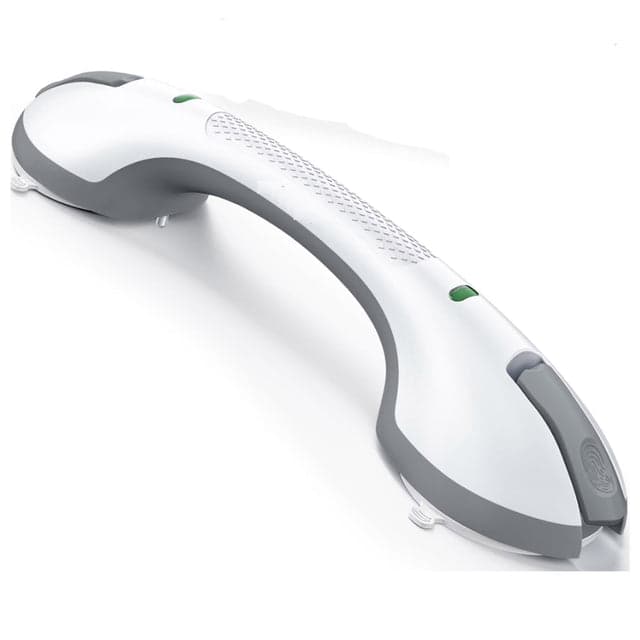 KEKOY 12" Grab Bars for Bathroom with Dual-Layer Suction Cup, Shower Handles for Elderly with Safety Indicators, No Drilling Heavy Duty Shower Bars, 1 PcKekoy · $49.99
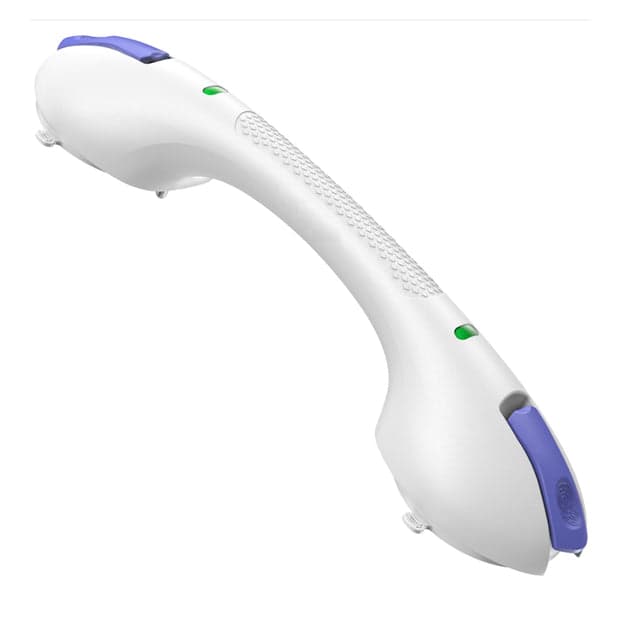 KEKOY 2 Pack Shower Handles for Elderly with Safety Indicators, 12" Grab Bars for Bathroom Stronger Suction Cup, Heavy Duty Shower Bars, Bathroom Safety Bars foKekoy · $75.99
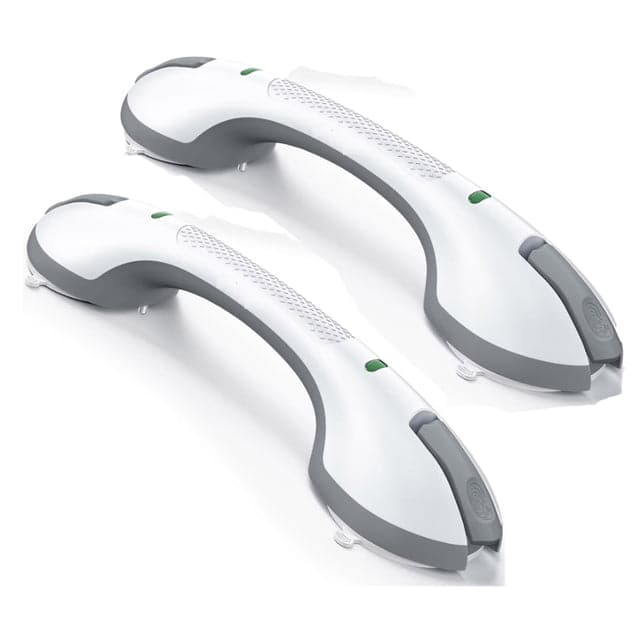 KEKOY 12" Shower Handles for Elderly, 2 Pack Dual-Layer Suction Grab Bars for Bathroom with Safety Indicator, No-Drill Shower Safety Bar for SeniorsKekoy · $75.99
The specifications and materials that actually work
Grab bar diameter and material matter far more than brand marketing. Bars between 1.25 and 1.5 inches in diameter are ideal: thick enough to grip comfortably without fatiguing the hand, thin enough for older fingers to wrap around fully. Anything thicker than 1.75 inches becomes harder to grip for arthritic hands; thinner bars flex under weight. Stainless steel is the only sensible material for wet bathrooms because it resists rust and mildew, and the slight texture prevents hand slippage. Plastic or chrome-plated bars corrode within 12 months in humid bathrooms. Kekoy offers stainless steel grab bars across its range, a material standard that ensures durability in wet environments. For non-slip mats, rubber or silicone materials with drainage holes prevent bacterial growth and water pooling. Adhesive-backed mats fail faster than suction-cup mats in daily use because adhesive breaks down when wet. Raised toilet seats should have foam or padded rims to prevent pressure sores during the long sit-to-stand movement, and grabber bars on the seat itself matter less than wall-mounted grab bars beside the toilet. Installation hardware must anchor into wall studs, not drywall alone; drywall anchors fail at 50 pounds of force, well below real-world use. Any bar that claims suction-cup-only installation is a safety liability.
What to buy now and what to skip
Start with grab bars, non-slip mats, and improved lighting. Skip transfer benches and walk-in tubs until you know whether grab bars alone are sufficient; these cost $500 to $3,000 and are the second purchase, not the first. Raised toilet seats are worthwhile if your senior has knee or hip pain, but optional if balance and grip are the only concerns. Shower chairs matter only for seniors who cannot stand for more than five minutes; a stable chair is cheaper than a fall. Anti-scald valves are genuinely useful to protect aging skin, but plumbers charge $150 to $300 to install them. Handheld showerheads are helpful but not critical if grab bars are in place. The low-value purchases are decorative grab bars that look nice but are undersized or poorly anchored, bathroom rugs that slide and cause falls, and complicated raised toilet seats with electronic features that break frequently. Kekoy's grab bar range spans price and installation type, so you can match budget to actual need rather than overspending on premium models when mid-range wall-mounted bars do the job. Focus instead on placement and materials: three well-placed, properly installed stainless steel bars prevent more falls than ten decorative bars. Lighting is as important as grab bars but is often overlooked; dark bathrooms cause more slips than wet floors.
How do you measure and install grab bars correctly?
Most families buy the wrong bar lengths because they measure the wrong dimensions. Horizontal bars should be 24 to 36 inches long and installed 33 to 36 inches above the floor (roughly elbow height when standing). Vertical bars work best at 24 inches tall, placed beside the toilet or inside the tub wall. Measure your bathroom with a pencil and level, not with your eyes. The three critical locations are: one bar beside the toilet (horizontal, for the sit-to-stand movement), one at the tub entrance (horizontal, for stepping over the edge), and one inside the shower or tub (horizontal or L-shaped for stability while bathing). If your senior showers standing, install a bar 18 inches from the shower door or curtain rod, at roughly shoulder height. Bars must anchor into wall studs, which are typically 16 inches apart; a stud finder is essential. If a wall has no studs in the right location, reinforcement boards must be installed before hanging bars. Suction-cup bars like those Kekoy offers for renters are an emergency backup only, not a permanent solution; they fail within weeks under real use. Installation takes two to three hours for a professional, costs $200 to $400, and is mandatory for proper safety. DIY installation is only sensible if you have experience with stud finders, hole drilling, and anchor bolts. A loose or improperly anchored bar is worse than no bar at all.
Which brands work best for each type of senior
Kekoy offers a range of bathroom grab bars at prices from $19 to $250, with options for renters (suction-cup styles) and permanent installations. Their product line includes multiple grip styles and finishes suited to different bathroom aesthetics and mobility needs. For seniors who need additional mobility aids beyond grab bars, Kekoy also carries grabbers, sock aids, and leg lifters, which address bathroom-adjacent tasks like dressing and picking up dropped items. These tools reduce the need to bend or squat, lowering fall risk during transitions. For a senior with strong grip and good balance who needs only basic grab bar support, entry-level options in the Kekoy range around $19 to $50 deliver the core function without extra cost. For seniors with arthritis or weak hands, higher-end models with textured grips and ergonomic designs ($80 to $150) justify the cost because grip comfort directly affects daily use and safety compliance. Seniors in rental apartments or temporary care situations benefit from Kekoy suction-cup products, which avoid wall damage and can be moved if care arrangements change. Permanent residents benefit more from Kekoy wall-mounted bars with stainless steel construction, which are more durable and reliable.
Quality versus price: What is worth paying for
The quality divide in grab bars is stark and directly tied to safety. Cheap bars under $20 are typically plastic or thin chrome-plated steel, corrode within six to twelve months, and often have uneven grip texturing that causes hand slippage. Mid-range bars ($40 to $100) are typically stainless steel with consistent grip texture, last 5 to 10 years, and come from manufacturers that stand behind their products with warranty claims. Premium bars ($100 to $250) are heavier gauge stainless steel, have ergonomic grip contours, and include reinforced wall anchors rated to 500+ pounds. Kekoy's product range spans this quality spectrum, allowing shoppers to find stainless steel options at mid-range and premium price points without compromising on materials. For a senior's daily safety, mid-range is the sweet spot: stainless steel construction, proper diameter, and proven grip. Paying more for premium brands makes sense if your senior has exceptionally weak grip or is heavier than average. Paying less than $30 for a load-bearing grab bar is a false economy; the bar will fail before it ever saves a fall. Installation quality matters as much as product quality. A $50 bar installed properly into studs is infinitely safer than a $200 bar installed into drywall anchors. Non-slip mats follow the same logic: rubber or silicone mats with drainage holes last 2 to 3 years and cost $15 to $40 per mat. Cheap plastic mats with adhesive backing fail in months. Buy quality mats and replace them every two years; accumulated algae and slime make old mats more dangerous than bare floors.
When do bathroom safety equipment prices drop?
Grab bars and bathroom safety equipment have modest seasonal price fluctuation compared to other home goods. Prices tend to be lowest in January and February when winter falls spike demand from hospitals and care facilities, driving bulk purchases and discounts. Summer months (June through August) see higher prices because renovations peak and retailers know families are preparing aging parents for summer visits. Coupons for safety equipment are rare because insurance and medical providers often reimburse purchases directly, reducing retailer reliance on promotions. Some Medicare Advantage plans cover grab bar installation and raised toilet seats if prescribed by a doctor, though reimbursement is typically $0 to $300 per item. Costco and bulk retailers occasionally offer grab bar bundles at 10 to 15 percent below standard retail, but only in sizes exceeding single-home needs. Small retailers and pharmacies typically charge 15 to 25 percent more than online options. The lowest total cost comes from buying a complete set of bars and mats at once from a single source, rather than adding items piecemeal as new risks become apparent. Spending $200 to $400 upfront on grab bars and installation prevents emergency room visits that cost $5,000 to $20,000.
What mistakes do shoppers make when buying this equipment?
The biggest mistake is waiting for a fall before installing grab bars. Families often research equipment thoroughly after an injury, spending money reactively rather than proactively. The second mistake is installing grab bars only where the senior asks for them, which is often the last place they actually use support. A senior with poor proprioception does not know where they are unsteady until they slip. Professional assessment, not patient preference, should drive placement. The third mistake is buying bars that are too large or textured to grip comfortably, assuming bigger and grippier are always safer. Oversized bars cause hand fatigue, which paradoxically increases fall risk because the senior grips less firmly. The fourth mistake is mixing permanent and temporary equipment: suction-cup bars in some places and wall-mounted bars in others creates an inconsistent safety feel, leading seniors to mistrust the equipment. Commit to one approach per bathroom. The fifth mistake is neglecting non-slip surfaces while overspending on visible equipment like shower chairs. A $500 shower chair cannot prevent falls if the floor is still slippery. The sixth mistake is installing grab bars at the wrong height or angle; bars installed at waist height are useless for sit-to-stand movements, which require bars at hip or thigh height. The seventh mistake is ignoring the rest of the bathroom: poor lighting, clutter on the floor, and loose rugs cause as many falls as missing grab bars. Finally, families often fail to involve the senior in testing and adjustment, assuming they will naturally learn to use new equipment. Walk through the bathroom together, practice the sit-to-stand movement, and adjust bar positions based on actual use before finalizing installation.
How can you reduce bathroom fall risk beyond equipment alone?
Equipment is only part of the solution. Environmental changes prevent falls as effectively as grab bars do. Remove all rugs and bath mats except for non-slip versions anchored firmly in place. Install nightlights in the bathroom and hallway so seniors can see the path during nighttime visits, when falls are most common and most severe. Clean floors immediately after showers to prevent water pooling. Improve overall bathroom lighting to at least 300 lumens at floor level; many bathrooms are too dim for safe walking. Install a drain mat or anti-slip tape on the shower floor, not just walls. Use a shower enclosure or door rather than a curtain, which can tangle and cause imbalance. Set water heater temperature to 120 degrees Fahrenheit to prevent scalding and allow seniors to adjust shower temperature without fear of burns. Remove electrical cords and clutter from the bathroom floor. Install a raised toilet seat with a padded rim even if falls have not happened; the reduced squat angle prevents many falls. Consider a bidet or washlet attachment to reduce the need for twisting or standing after using the toilet. Teach your senior to call for help if they feel unsteady, rather than attempting to stand alone. A medical alert device worn during bathing ensures that falls are noticed quickly, reducing injury severity. Finally, review medications with a pharmacist to identify balance-affecting drugs; some sedatives and blood pressure medications cause dizziness that increase fall risk independent of bathroom design.
Our top picks

Kekoy35% off
Offers wall-mounted and suction-cup grab bars from $19 to $250, plus mobility aids like grabbers and leg lifters for bathroom safety.
Shop Kekoy →15 Kekoy coupons →Frequently asked questions
Are suction-cup grab bars safe for seniors?
Suction-cup bars are temporary solutions only. They typically hold 50 to 100 pounds and fail within weeks under daily use. Wall-anchored bars into studs are the only safe permanent choice for load-bearing support during falls.
How often should non-slip mats be replaced?
Replace non-slip mats every two years, or sooner if you notice algae growth, worn texturing, or loose suction cups. Accumulated slime makes old mats slippery and bacteria-laden, creating the opposite of safety.
What is the right grab bar height and diameter?
Horizontal bars should be 33 to 36 inches above the floor and 24 to 36 inches long. Bar diameter should be 1.25 to 1.5 inches to allow a full hand grip. Vertical bars work best at 24 inches tall, placed beside toilets.
- https://www.walmart.com/ip/17435822757
- https://www.ripbs.org/news-culture/health/more-elderly-americans-are-choking-to-death-are-these-devices-the-answer
- https://ekohealth.com/page/about
- https://www.nbcnews.com/health/health-news/elderly-americans-are-choking-death-are-devices-answer-rcna218685
- https://www.med.umich.edu/1libr/PMR/BathroomSafetyEquipment.pdf