
Graduated and support stockings compared
Graduated medical compression stockings are prescribed for specific health conditions like varicose veins, chronic venous insufficiency, and deep vein thrombosis prevention. They deliver controlled pressure that is strongest at the ankle and gradually decreases up the leg, meeting strict technical and medical specifications. Support stockings, by contrast, provide uniform pressure throughout and are intended for general leg fatigue, aching from standing or sitting all day, and prevention of mild swelling during travel. Both offer elastic support, but medical graduated stockings work through a precise pressure gradient that directs blood flow upward toward the heart, while support stockings simply maintain even compression to ease discomfort. A key rule: support stockings are not a substitute for medical compression if you have a diagnosed circulatory condition, because incorrect pressure distribution can actually impede circulation. Graduated compression is the choice for specific medical needs, while support stockings suit everyday comfort and mild prevention.




How pressure delivery sets them apart
The fundamental difference lies in how pressure is applied to your leg. Graduated compression stockings deliver the strongest compression—measured in mmHg (millimeters of mercury)—at the ankle, typically 20–30 mmHg, and this pressure tapers as you move up the leg. This gradient creates a pump-like effect that helps push blood upward against gravity, reducing swelling and improving circulation for people with circulatory disorders. Support stockings apply the same compression level uniformly from ankle to top, without tapering. This flat pressure is gentler and more comfortable for everyday wear, but it does not produce the therapeutic pumping action needed for medical conditions. For someone with mild varicose veins or spider veins, the graduated pressure of medical stockings delivers the clinical benefit their condition requires. For someone whose legs ache after a long flight or standing shift, the even compression of support stockings is sufficient and often more comfortable because there is no pressure variation. Compression levels range from light (8–15 mmHg) for mild fatigue through firm (20–30 mmHg) and extra-firm (30–40 mmHg+) for serious conditions. CompressionSale.com offers graduated medical-grade compression stockings in a range of sizes to match your leg measurements, ensuring the pressure is distributed correctly for therapeutic effect.
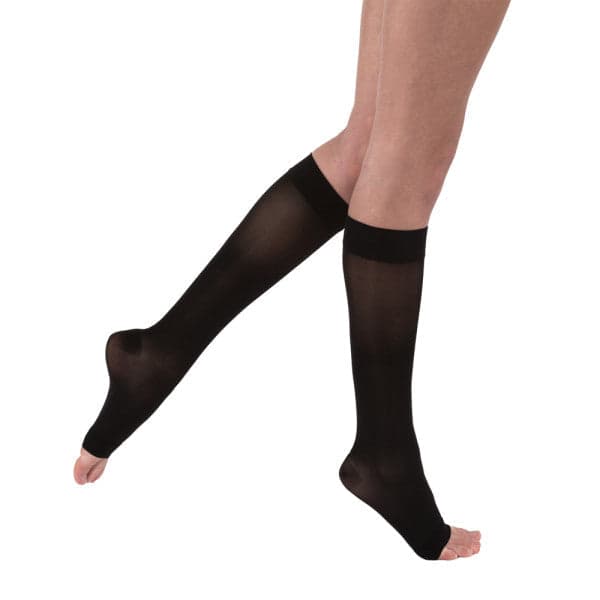 JOBST® UltraSheer Women's Knee High 15-20 mmHg, Open Toe | Clearance (Final Sale)CompressionSale.com · $41.60
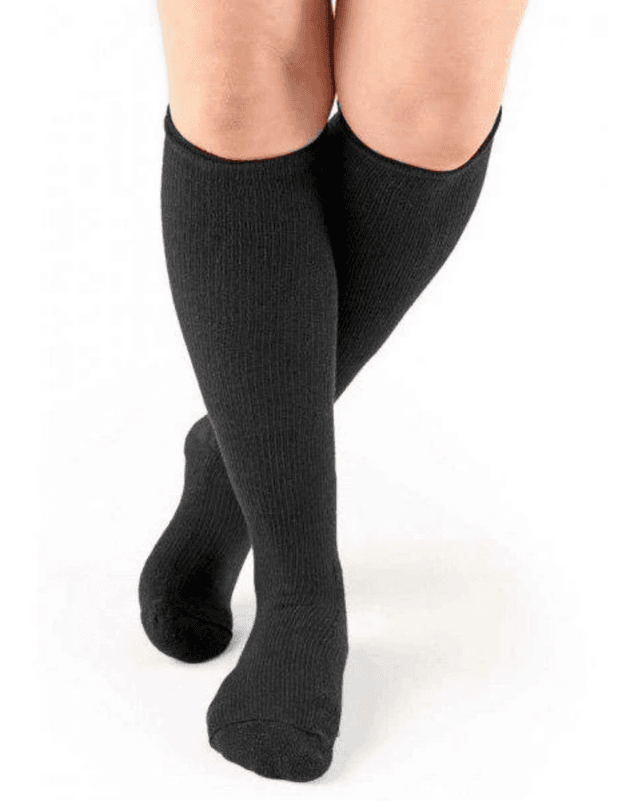 Sigvaris Complete Liner 10-15 mmHgCompressionSale.com · $31.88
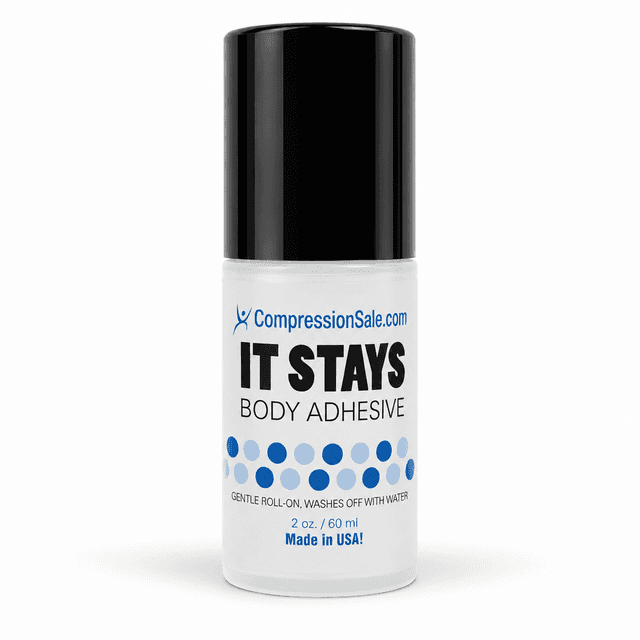 IT STAYS!® Body Adhesive 2 oz. Roll-OnCompressionSale.com · $11.78
Cost and maintenance differences
Medical graduated compression stockings typically cost between $36 and $100 per pair, depending on the compression level, material quality, and brand, while comfort support stockings range from $8 to $50 per pair. The higher price of medical stockings reflects their stricter manufacturing standards, durability under therapeutic use, and often the need for multiple pairs to allow for rotation and washing. Both types require hand washing after each wear or every other wear using gentle detergent, with cold water to protect the elastic fibers. Machine washing on a delicate cycle in a mesh bag is acceptable if done carefully, but the key rule is never use a dryer—heat damages the elastic and destroys compression. Both should air dry completely. Because compression fibers weaken with repeated washing and wearing, expect to replace either type every three to six months with regular daily use. Medical graduated stockings made from high-quality materials may last longer and maintain their therapeutic compression throughout this period, which is why the upfront investment pays off. Support stockings, being less engineered, may degrade slightly faster if worn constantly. Neither type requires any special storage, but keeping them in a cool, dry place away from direct sunlight extends their lifespan. If you wear compression only occasionally, such as for air travel, one pair of support stockings may serve you for a year or more.
Space and fit: what to check before buying
Graduated medical compression stockings and support stockings come in two main lengths: knee-high and thigh-high. Knee-high stockings end just below the knee and suit most everyday needs, taking up minimal space in a drawer or luggage. Thigh-high stockings extend to the upper thigh and are necessary if swelling or circulatory problems occur above the knee, such as when varicose veins extend beyond the knee area. Thigh-high options take more space to store and may feel warmer in hot climates, but they provide comprehensive coverage for full-leg treatment. Both lengths are available in support and graduated varieties, so length is independent of type. Fit is critical for both: compression stockings only work if they actually fit your leg snugly without bunching or slipping. This requires accurate measurement of your ankle circumference and calf width at the widest point just above the ankle. Many medical suppliers and online retailers provide sizing charts, and CompressionSale.com provides stockings in a full range of sizes. An ill-fitting stocking will roll down, bunch at the ankle creating pressure points, or feel uncomfortably loose, defeating its purpose. Support stockings are generally easier to fit correctly because uniform compression is more forgiving of minor sizing errors than graduated pressure, which must taper precisely.
- Measure ankle circumference at narrowest point above ankle bone
- Measure calf at widest point, typically halfway between knee and ankle
- Measure in the morning when legs are least swollen
- Cross-reference measurements with the exact brand's sizing chart
- Knee-high for below-knee issues; thigh-high for above-knee swelling
Choose medical graduated compression if you have these needs
Medical graduated compression stockings are the right choice if you have been diagnosed with varicose veins, spider veins, chronic venous insufficiency, edema, lymphedema, or deep vein thrombosis risk, or if you have experienced blood clots or thrombotic events in the past. They are also recommended during recovery from major surgery when clot prevention is critical, for pregnancy-related leg swelling that persists, and for any condition where a healthcare provider has specifically prescribed compression therapy. If you spend long periods immobilized—such as bed rest—antiembolism stockings (a medical subtype of graduated compression) are prescribed to prevent clots. CompressionSale.com supplies medical-grade graduated compression stockings in multiple compression levels and sizes, allowing you to match a stocking to your exact condition and measurement. You will likely need a prescription or a doctor's recommendation to confirm the correct compression level, typically ranging from 20–30 mmHg for moderate conditions to 30–40 mmHg for more serious venous issues. Expect a higher per-pair cost, but the therapeutic benefit for an actual medical condition justifies the expense. If you are managing a circulatory disorder, insurance may cover part or all of the cost of medical stockings, so check with your provider before purchasing out of pocket. Medical stockings should be worn daily, often all day, for maximum therapeutic effect, so plan to buy at least two pairs so you always have a clean pair while one is drying.
Choose support stockings if your legs just need relief
Comfort support stockings are the better choice if you experience tired, achy, or heavy legs from standing or sitting all day at work, recover from flights, want to prevent mild swelling during air travel or long car rides, or simply desire everyday fatigue relief without a medical diagnosis. They suit athletes who want compression for recovery or runners prone to calf soreness, and they work well for anyone seeking a gentle compression boost without medical intervention. Support stockings typically use 8–20 mmHg compression, which is lower than medical graduated stockings, making them more comfortable for extended casual wear. Because they are not engineered to treat a specific condition, insurance will not cover them, and you will bear the full cost, usually $8–$50 per pair. The upside is that support stockings are available everywhere—pharmacies, sporting goods stores, online retailers, medical supply shops—and require no prescription. Wear them as often as you like: some people wear them daily at work, others only on travel days or after workouts. They are easier to put on than medical stockings because the uniform compression does not require precise alignment, so many users manage without a donning aid. Support stockings are an excellent choice if you like the feeling of compression but have no diagnosed circulatory problem, or if you want to experiment with compression therapy before committing to medical-grade stockings and the associated measurement and prescription processes.
The case for owning both types
Some people benefit from owning both medical graduated and comfort support stockings, using each for different purposes. If you have been diagnosed with a venous condition, you would wear medical stockings daily as your therapeutic treatment, but you might also own a pair of support stockings for casual wear on days when you want lighter compression or easier on-and-off. For example, someone with moderate varicose veins might wear medical 20–30 mmHg stockings to work but reach for support stockings for weekend relaxation at home when the therapeutic intensity is less critical. Athletes with no medical condition who wear support stockings for recovery might also benefit from adding medical compression during travel to prevent swelling and clot risk on long flights, especially if they are at any genetic risk for thrombosis. However, this dual approach is overkill for most people. If you have no medical diagnosis and wear stockings only for occasional travel fatigue or work discomfort, buying one or two pairs of support stockings is sufficient—there is no benefit to also buying medical stockings. Similarly, if you are prescribed medical compression for a serious condition, you probably do not need support stockings as well, because medical stockings handle both therapeutic and comfort roles. The exception is convenience: keeping a pair of support stockings in your travel bag so you always have a pair ready, while your medical stockings stay home for daily wear, can be practical. Cost is the limiting factor—because medical stockings are expensive and require replacement every few months, adding support stockings to the rotation is only worth it if you genuinely use them regularly.
When do prices drop, and what discounts cover?
Compression stockings do not follow seasonal sales patterns the way clothing or footwear does, because they are medical supplies with consistent demand year-round. However, prices may drop during major retailer sales events or when buying in bulk. Online medical supply retailers sometimes offer discounts for ordering multiple pairs at once, such as two or three pairs together, reducing the per-pair cost by 10–20 percent. Insurance coverage and flexible spending accounts (FSAs) offer the most significant savings for medical graduated stockings: if your doctor prescribes them, an FSA can cover up to the full cost as a qualified medical expense, and many health plans provide partial reimbursement. For support stockings, which are not medically prescribed, FSA and insurance do not apply. Manufacturer coupons or rebates occasionally appear on medical supply websites but are limited compared to consumer goods. The best strategy for cost savings is to buy multiple pairs upfront when you first start compression therapy, spreading your investment over two or three pairs that rotate through washing and drying, and then budget for replacement pairs every few months. Buying directly from medical supply retailers often costs less than purchasing through pharmacies, and CompressionSale.com competes on price for graduated medical stockings in various compression levels. Watch for seasonal promotions around health awareness events such as Vascular Health Month, though savings are typically modest. If budget is tight, start with one pair of either type to test fit and comfort before committing to multiple pairs.
What mistakes should shoppers avoid when choosing?
The biggest mistake is skipping the measurement step. Compression stockings only work if they fit correctly, and guessing your size results in a stocking that slips down, bunches around the ankle causing pain, or feels too loose to provide any benefit. Always measure your ankle circumference and calf width at the widest point just above the ankle using a soft measuring tape, and consult the sizing chart for the exact brand you are considering—sizing varies between manufacturers. A second common error is choosing the wrong compression level. Some people assume a lower mmHg feels safer and pick 15–20 mmHg when their condition actually requires 20–30 mmHg or higher, resulting in inadequate therapeutic effect. Conversely, buying too-high compression without a medical recommendation can cause discomfort or skin irritation. Always have a healthcare provider confirm the correct compression level for a medical condition; for support stockings, starting at 8–15 mmHg is safe and you can upgrade if you want firmer pressure. Third mistake: not replacing stockings often enough. After three to six months of daily wear, the elastic fibers fatigue and compression drops below therapeutic levels, meaning you are wearing a loose stocking without realizing it. Mark your calendar when you buy a pair and plan to replace it. Fourth: improper care. Throwing compression stockings in a hot dryer or washing with bleach ruins the elastic instantly; always hand wash or machine wash gently in cold water and air dry. Fifth: ignoring wrinkles during application. Folding or bunching the fabric when pulling on a stocking creates pressure points and reduces compression effectiveness; smooth out every wrinkle as you roll it up your leg. Finally, many people fail to consult a healthcare professional before buying medical stockings, leading to the wrong compression level or type—antiembolism stockings for bedridden patients are different from graduated stockings for ambulatory patients and will not work if mixed up.
- Skipping accurate measurement—always measure ankle and calf with tape
- Choosing wrong compression level without medical guidance
- Not replacing stockings after 3–6 months of daily wear
- Using hot dryer or bleach, which destroys elastic fibers instantly
- Creating wrinkles or bunches when putting on the stocking
- Buying medical compression without a prescription or healthcare recommendation
Our top picks
CompressionSale.com30% off
Supplies graduated medical-grade compression stockings in multiple compression levels and sizes, ideal for matching to diagnosed circulatory conditions.
Shop CompressionSale.com →20 CompressionSale.com coupons →Frequently asked questions
Can I wear support stockings instead of medical compression?
No, if you have a diagnosed circulatory condition such as varicose veins or chronic venous insufficiency. Support stockings provide uniform pressure and are not engineered for therapeutic effect. Medical graduated stockings with proper pressure gradient are required for actual treatment.
How often should I replace compression stockings?
Plan to replace either medical or support stockings every three to six months with daily use. The elastic fibers weaken with repeated washing and wearing, so compression gradually drops below effective levels.
What is the most common sizing mistake?
Guessing your size instead of measuring your ankle circumference and calf at the widest point with a soft tape. Measure in the morning when swelling is lowest, and cross-reference with the exact brand's sizing chart—sizing varies between manufacturers.
- https://vimvigr.com/blogs/our-blog/how-to-measure-for-compression-socks
- https://padlock.stukent.com/?p=1156434
- https://herzogmedical.com/en/pages/the-difference-between-support-socks-and-compression-socks
- https://www.medi.de/en/faq/compression-garments/support-stockings/
- https://myshoesreview.com/?p=19100